


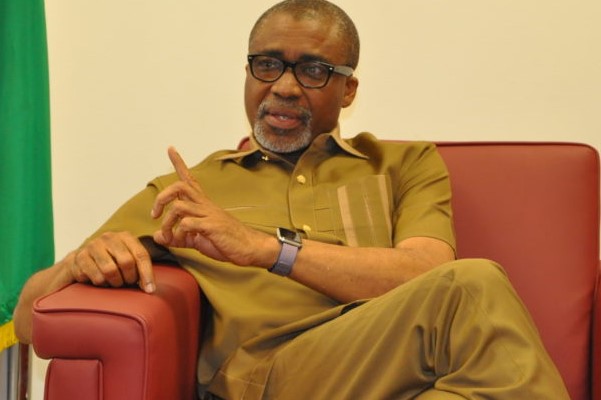
Senator Abaribe Enyinnaya, a veteran lawmaker from Abia South, has resigned from the All Progressives Grand Alliance (APGA) and defected to the African Democratic Congress (ADC), injecting fresh momentum into Nigeria’s splintering opposition landscape ahead of the 2027 elections.
Senator Abaribe, 68, made the announcement Wednesday after weeks of speculation, citing “irreconcilable differences” with APGA leadership and a quest for a platform committed to “democratic accountability and national renewal.”
In a statement read to supporters in Abuja, he declared: “After wide consultations, I have taken the decision to formally resign from APGA and align with the African Democratic Congress, which provides a clearer vision for good governance.”
The move catapults Abaribe, APGA’s most prominent national voice, into the ADC fold alongside recent high-profile joiners like Peter Obi, amplifying signals of a brewing “third force” coalition.
Senator Abaribe emphasized Nigeria’s need for “a strong and principled opposition capable of offering citizens a viable alternative,” framing his switch as a stand against what he called APGA’s slide into unilateralism.
Fractures in APGA’s Southeastern Stronghold
Abaribe’s exit stems from months of escalating tensions within APGA, a party rooted in Igbo nationalism since 2002 under founder Chief Chekwas Okorie.
Long a deputy governor of Abia State (1999-2003) and Senate Minority Leader (2019-2021), Abaribe had been the party’s intellectual anchor, championing restructuring and fiscal federalism.
Strains boiled over internal democracy lapses, opaque candidate selections, and perceived marginalization of stakeholders, sources told wahalaupdate.
Abaribe publicly lambasted APGA brass for “unilateral decisions and failure to build consensus,” particularly in Abia where he resisted strategies seen as cozying up to President Bola Tinubu’s APC.
“He viewed alliances as compromising APGA’s independence,” said a party insider.
Disputes peaked over 2025 local polls and national positioning, with Abaribe blocking moves that diluted the party’s anti-establishment edge.
APGA National Chairman Edozie Njoku dismissed the defection as “personal ambition,” vowing continuity.
But the loss stings: Abaribe polled 98% in Abia South’s 2023 rerun, delivering the Southeast’s only non-APC Senate seat outside PDP bastions.
ADC’s Southeastern Surge
Abaribe’s arrival supercharges ADC’s regional push.
“Abaribe brings legislative gravitas and Abia machinery,” ADC spokesperson Martin Akpor.
“With Obi, we’re building a competence coalition, not ethnic, but national.”
ADC insiders predict 200,000+ APGA defections, fortifying Igbo heartlands where Obi hit 90% in 2023.
Southeast Politics: Marginalization and Ambition
Abaribe embodies Igbo political frustration. No Southeast president since 1966’s brief Nnamdi Azikiwe; no VP since 1999.
Biafra War scars linger, fueling separatist IPOB echoes. Abaribe’s 2021 bail surety for Nnamdi Kanu, later revoked, burnished his nationalist cred, though he distanced from violence.
His career zigzags: PDP deputy gov, PPA senator (2007), APGA mainstay.
“ADC offers 2027 presidential runway, Southeast’s turn per zoning whispers.”
Abia, oil-rich yet poor (63% poverty, NBS), amplifies urgency.
Abaribe’s bills pushed state police, resource control; ADC echoes them.
National Stakes: Tinubu’s Opposition Nightmare?
Tinubu’s APC dominates: 59 Senate seats, 21 governorships post-2025.
But cracks show, economic pain (39% inflation, naira at 1,650/$), banditry (2,000 deaths, ACLED 2025). Approval dips to 47% (Afrobarometer Q4).
2027 math: Presidency rotates north post-Tinubu; Southeast eyes VP or coalition kingmaker.
Abaribe-Obi tandem? “Viable if northern buy-in,” per NOI Polls modeling Obidients at 28% nationally.
INEC reforms loom: BVAS upgrades, diaspora voting pilots.
Yiaga Africa warns over 200 election deaths risk without them. Human Rights Watch flags defections as “elite games” ignoring voters.
Economic Backdrop and Voter Pulse
Nigeria’s headwinds fuel insurgency. 40% multidimensional poverty; youth jobless at 54%.
Tinubu’s wins, Dangote Refinery (650k barrels/day), 16GW power, clash with subsidy scars.
Abaribe critiques: “Reforms without safety nets betray the masses.”
In Aba markets, reactions mix. Tailor Chinedu Okoro, 32: “Abaribe fights for us; ADC means jobs.”
Elder Ngozi Eze, 55: “Party-hopping fatigue.” Obidients rally; APC youth mock “deserters.”
Investors jitter: FDI down 22%; polls volatility spooks $450 billion GDP.
Road to 2027: Coalition or Chaos?
Abaribe eyes Senate return, mentoring ADC newbies.
Obi tours U.S. for funds ($10 million 2023 haul).
Challenges: APC’s N200 billion war chest, ethnic silos, violence.
Optimism flickers. “2023 proved youth power,” Abaribe says. “ADC is our vehicle.”
As Nigeria’s democracy teeters, Abaribe’s defection spotlights hope, or hubris, in opposition revival.
