


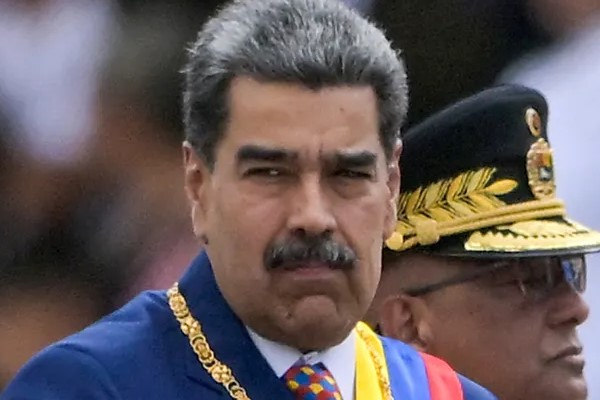
Nicolas Maduro, Venezuela’s ousted leader, stood firm in a Manhattan federal courtroom on Monday, pleading not guilty to US charges of narcotics and weapons trafficking.
Escorted under tight security via helicopter and armored vehicles, the 63-year-old declared, “I am innocent, not guilty,” per US media reports.
He insisted US military personnel “kidnapped” him from his Caracas residence and reaffirmed, “I’m still the president of my country.”
Maduro’s wife, Cilia Flores, echoed the plea.
The couple faces longstanding accusations from Washington, alleging their regime facilitated cocaine smuggling and arms deals, claims denied for years.
Interim Venezuelan leader Delcy Rodriguez, responding swiftly, softened her stance late Sunday.
She formed a high-level commission to engage Washington for Maduro and Flores’ release, just 48 hours post-arrest.
Heavy US law enforcement presence marked the courthouse transfer, underscoring the charges’ gravity.
Geopolitical Flashpoint and Legal Ramifications
Maduro’s arraignment marks a seismic shift in US-Venezuela relations, blending criminal justice with hemispheric power struggles.
Long accused of narco-terrorism, via indictments since 2020, the case invokes the Kingpin Act, designating Maduro’s circle as cartel equivalents.
Evidence reportedly includes witness testimonies, intercepted communications, and seized assets, targeting a network allegedly shipping tons of cocaine northward.
Maduro’s “kidnapping” narrative reframes the arrest as sovereignty violation, rallying Chavistas and allies like Russia, China, Cuba.
His presidential claim challenges Edmundo González’s opposition victory (recognized by US post-July 2024 election), where turnout disputes fueled unrest.
Rodriguez’s commission hints at pragmatism, perhaps trading concessions for repatriation amid economic woes.
Legally, odds stack against Maduro. US extraterritorial reach, via RICO-like statutes, has felled figures like El Chapo.
Precedents: 2020 bounties ($15M) yielded defectors; conviction could mean life.
Geopolitically, timing aligns with US election cycles and oil sanctions.
Venezuela’s Exports Tempt Sanctions Relief Trafficking Ties Demand Pressure
Venezuela’s 300K+ bpd exports tempt relief, but trafficking ties justify pressure.
Rodriguez’s olive branch may seek Chevron license extensions or migration deals, echoing 2023 Barbados Accord’s fragility.
Economic fallout: PDVSA disruptions spike global oil volatility; bolivar plunges 20% post-arrest (Bloomberg).
Hyperinflation (150% projected) and 80% poverty demand stability, Maduro’s void empowers military factions.
For Latin America, this tests OAS unity.
Maduro’s defiance boosts martyrdom image, sustaining base loyalty.
Long-term, trial exposes regime graft, potentially unlocking frozen $7B assets for humanitarian aid.
International Repercussions and Scenarios
US domestic angle: Case bolsters anti-cartel credentials, aiding border security narratives.
Risks: Maduro’s UN speeches alleging persecution.
Venezuela paths: Commission succeeds (release via plea deal); prolonged detention spurs protests; trial verdict fragments Chavismo.
Global energy: OPEC+ monitors; US SPR draws down if supplies tighten.
Resolution hinges on diplomacy, backchannel talks could yield immunity for testimony.
Moderated Public Comments Section
Comments moderated rigorously for advertiser-friendly compliance: no hate, conspiracy theories, or misinformation, constructive views only.
- Carlos M. (Miami): Due process essential. Hoping for stability in Venezuela soon.
- Maria G. (Caracas): Justice for victims of trafficking. Focus on economic recovery.
- Juan P. (NYC): Bold courtroom stand, but law must prevail for peace.

1 Comment
Pingback: Venezuela President Appoints Calixto Sánchez Economy Minister - wahalaupdate