


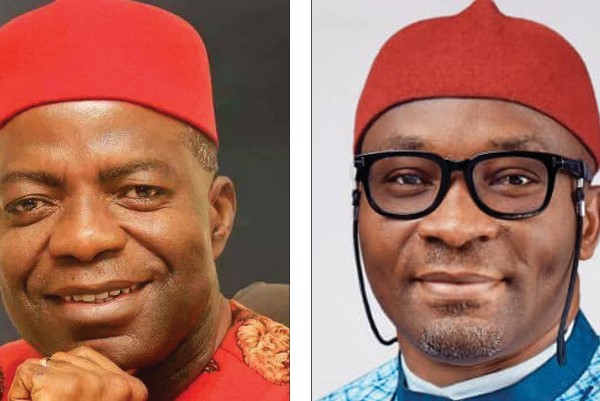
Abia State Government categorically dismissed Senator Orji Uzor Kalu’s vow to deliver the Governorship House to APC in 2027, declaring the state immune to political bargaining or familial dominance.
In a January 5 statement by Chief Press Secretary Ukoha Njoku Ukoha, officials affirmed Labour Party’s incumbency while upholding voters’ sovereignty.
Kalu, Abia North Senator, reportedly positioned his party, and potentially his brother, for takeover.
The response acknowledged his rights but rejected “family fiefdoms” monopolizing roles like senator, governor, commissioner in the National Assembly Service Commission, and ambassador.
“Power belongs to Abians,” it emphasized, warning against anti-democratic concentrations.
Labour Party touted over three credible Abia North aspirants, embodying merit, inclusivity, and internal democracy.
Unlike individual-centric structures, it prioritizes citizens’ aspirations.
The party pledged mobilization for primaries and elections, urging resistance to monopolies for accountable governance.
Recent history, per the statement, shows voter awareness defending their mandate.
Dynastic Politics vs. Voter Empowerment in Nigeria’s Southeast
Governor Alex Otti’s riposte encapsulates Abia’s evolving political ethos, challenging entrenched patronage.
Kalu, APC chieftain and ex-governor (1999-2007, 2019 attempt), leverages legacy, wealth from business, senatorial clout.
His 2027 pledge eyes Labour’s 2023 upset, where Otti won 50%+ amid PDP/APC fragmentation.
“Abia not for sale” slogan weaponizes anti-elite sentiment, echoing Obi-dien momentum.
Family references critique Kalu’s kin in key posts, spotlighting nepotism risks: accountability erosion, talent sidelining.
Globally, dynasties like India’s Gandhis yield mixed results; Nigeria’s, like Akwa Ibom’s Udom, spark revolts.
Labour’s incumbency shines: Otti’s reforms, Umuahia masterplan, revenue surge 300% (state data), insecurity drop, bolster case.
2023’s 70% youth turnout (INEC) signals shift from godfatherism.
Electorally, Abia North’s Igbo heartland favors incumbents, but APC’s federal machine threatens.
Kalu’s 2023 Senate win (52%) vs. Otti’s gubernatorial sweep shows splits.
Labour’s aspirant pool fosters primaries, contrasting APC’s top-down risks.
Otti’s rebuff positions him as defender against “Lagos imperialism,” rallying base.
Economic stakes: Abia’s Aba trade hub, oil/gas, needs stability.
Dynastic feuds historically stall FDI; Otti’s investor drives (e.g., Geely plant) gain from unity.
Risks: Escalation invites violence, as 2019 saw.
Positives: Voter education via INEC’s CVR boosts consciousness.
2027 outlook: Labour leads polls 55% (NOI), but APC’s war chest narrows gap.
Governance Models and Future Scenarios
Inclusive parties outlast dynasties: Labour’s bench signals depth.
Kalu’s bid tests APC’s inclusivity post-2023 sweeps.
Voter power: Digital mobilization (WhatsApp, TikTok) empowers youth, per 65% penetration (NCC).
Paths: Harmonious primaries; coalitions; court battles.
Abia exemplifies Nigeria’s democratic maturation.
Moderated Public Comments Section
Strictly moderated for advertiser-friendly standards: constructive dialogue only, excluding tribalism, attacks, or falsehoods.
- Chidi O. (Aba): Voters decide! Proud of Otti’s focus on people over families.
- Ngozi E. (Umuahia): Labour’s aspirants show real democracy. Abia rising.
- Emeka N. (Abia North): Reject monopolies. Merit for progress.
