


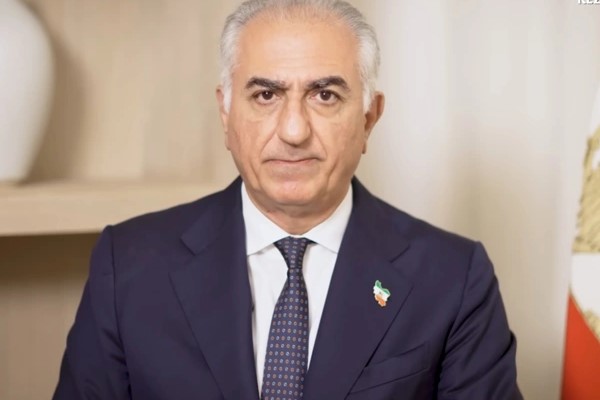
Iran’s prolonged wave of anti-government protests is entering a decisive and controversial phase, as chants calling for Reza Pahlavi, the exiled son of Iran’s last shah, echo through streets from Tehran to provincial cities.
What began as public outrage over governance, economic hardship, and social repression is now evolving into a broader debate about Iran’s political future and whether salvation can come from exile.
The renewed visibility of Reza Pahlavi in Iran protests signals a strategic shift among segments of demonstrators searching for a unifying symbol amid decades of fractured opposition.
A Prince Shaped by Exile, Not Power
Born in 1960 and groomed from childhood to inherit Iran’s Peacock Throne, Reza Pahlavi’s destiny was derailed by the 1979 Islamic Revolution.
At just 17, he was in the United States training as a fighter pilot when the monarchy collapsed, forcing his family into permanent exile.
What followed was not a smooth transition into leadership, but a life marked by displacement, loss, and political irrelevance.
The Pahlavi dynasty dissolved into history, his father died in exile, and two of his siblings later died by suicide , tragedies that left Reza Pahlavi as the symbolic custodian of a fallen order.
Now 65 and based near Washington DC, Pahlavi portrays himself less as a monarch in waiting and more as a facilitator of democratic transition.
He insists the past cannot be restored, only reckoned with.
From Symbol to Strategy
For years, Pahlavi maintained a low political profile, repeatedly stating that “change must come from within Iran.” That stance has shifted.
Following Israeli air strikes in 2025 that weakened Iran’s military leadership, Pahlavi publicly declared his readiness to help guide a transitional government if the Islamic Republic collapses.
He later unveiled a 100-day transition roadmap, proposing interim governance, constitutional reform, and a national referendum to determine Iran’s political system.
Supporters argue this marks maturity , a man shaped by exile but sharpened by time.
Critics say it is a calculated pivot, timed to exploit instability rather than earned grassroots legitimacy.
A Divisive Name, A Divided Nation
The Pahlavi name still carries weight inside Iran, but not consensus.
To admirers, the pre 1979 era represents modernization, secular governance, women’s advancement, and global engagement.
To detractors, it recalls censorship, inequality, and the brutal Savak secret police.
This unresolved legacy complicates Pahlavi’s appeal.
While chants invoking his grandfather resurfaced during protests in 2017 and intensified after the 2022 Mahsa Amini protests.
Many Iranians remain wary of replacing one unelected authority with another, even under democratic branding.
Foreign Shadows and the Question of Independence
Pahlavi’s international engagements have further polarized opinion.
Pahlavi’s 2023 Israel visit, Western meetings, and regime-weakening remarks fuel foreign dependency accusations against him.
Can an exiled leader backed by global powers deliver sovereignty, not just regime change?
This concern lies at the heart of skepticism surrounding Reza Pahlavi’s role in Iran protests.
The Protest Movement’s New Wave
What is undeniable is that Iran’s protest movement is no longer purely reactive.
It is experimenting searching for leadership, narrative coherence, and an exit strategy from perpetual unrest.
The chants invoking Pahlavi are less a coronation than a referendum in progress
Yet protests alone do not build states. Symbols do not replace institutions. And exile does not automatically confer legitimacy.
Realistic Expectations
Reza Pahlavi tests what protesters accept, reject, or risk; he leads Iran’s uprising symbolically at this stage.
Whether Reza Pahlavi bridges democratic transition or fades as figurehead depends on one decisive factor.
He proves independence from history, foreign powers, and illusions of Iran’s future engineered abroad.
For now, Iran stands at a familiar crossroads torn between memory and momentum, hope and caution, revolution and restraint.
