


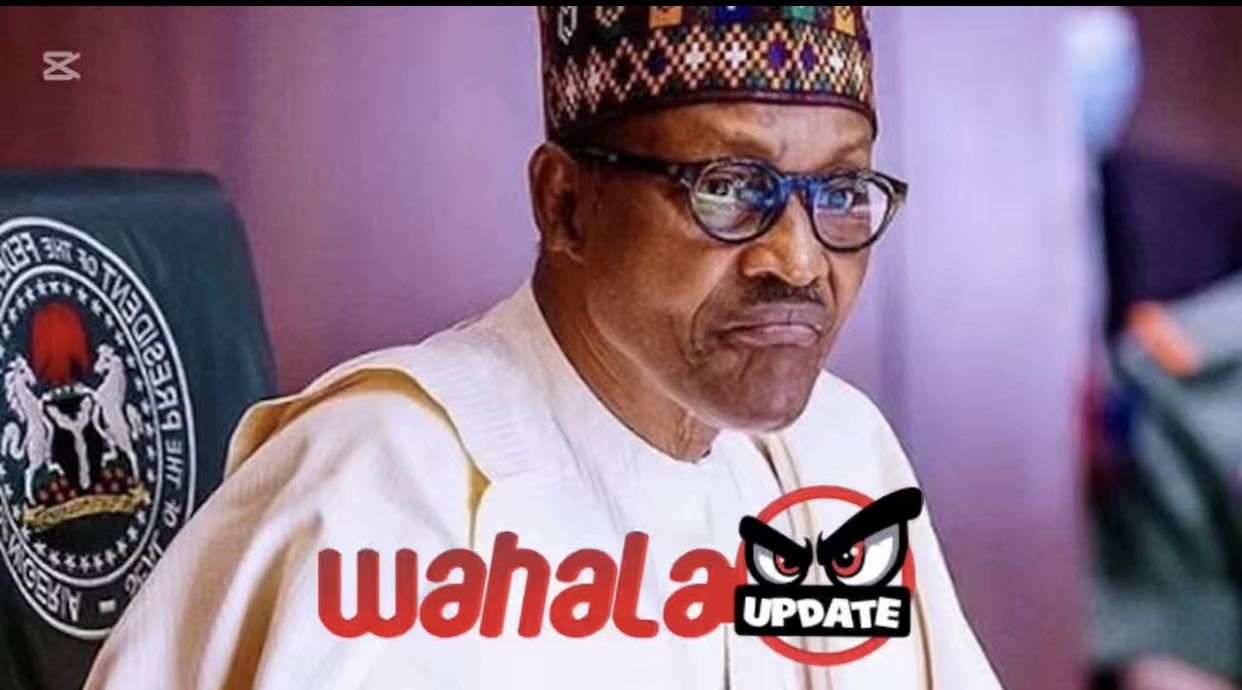
The death of former Nigerian President Muhammadu Buhari has reignited old controversies and conspiracy of the British theories, July 14, 2025.
Kanunta, younger brother of the detained Indigenous People of Biafra (IPOB) leader Nnamdi Kanu, has harshly criticized the circumstances surrounding Buhari’s death.
He claims the “cabal” and the British government have finally played their “last joker” on Nigeria.
Buhari’s Death: The Official Story
On Sunday, July 13, 2025, Buhari died at a clinic in London after a prolonged illness.
His former spokesperson, Garba Shehu, confirmed the death, stating the family announced it publicly.
Buhari was 82 years old
President Bola Ahmed Tinubu declared seven days of national mourning and ordered flags to fly at half-mast.
He also sent Vice President Kashim Shettima to London to bring Buhari’s remains back to Nigeria for burial in Daura, Katsina State.
Kanunta’s Controversial Reaction
Kanunta took to X (formerly Twitter) to express his bitter opinion.
He wrote, “Gen Mohammadu Buhari is dead for the second time.
Finally the cabals and the British Gov have played their last joker on a hopeless country called Nigeria.”
This conspiracy theory has circulated since 2017, fueled by Buhari’s frequent medical absences and secrecy about his health.
This theory, popularized by IPOB leader Nnamdi Kanu, claims Buhari’s identity was faked to maintain power.
The “Cloning” Allegation: Fact or Fiction
In 2017, Buhari spent five months in Britain for undisclosed medical treatment.
During this period, Nnamdi Kanu alleged that Buhari was cloned and replaced by an impostor.
Buhari himself denied these claims upon his return in 2018, insisting he was not Jubril of Sudan.
Despite official denials, the cloning theory has persisted online and among some Nigerians.
Kanunta’s recent statement fuels these suspicions, suggesting the British government and Nigerian cabal manipulated Buhari’s identity for political control.
Why This Matters: Distrust in Leadership
Kanunta’s remarks reveal a deep mistrust in Nigeria’s political system.
Many Nigerians feel betrayed by leaders who hide the truth or manipulate facts.
Buhari’s health was often shrouded in secrecy during his presidency, with frequent medical trips abroad.
This opacity bred rumors and conspiracy theories.
During Buhari’s presidency and after, the government provided limited information about his health, especially during his frequent medical trips abroad.
Kanunta’s statement reflects the frustration of those who see Nigeria as a “hopeless country” ruled by unseen forces.
Buhari’s Legacy: A Controversial Figure
Buhari’s death reopened debates about his eight years in office.
He received praise for his anti-corruption rhetoric, particularly for implementing the Treasury Single Account (TSA) system and securing more convictions than predecessors.
Boko Haram insurgency and banditry worsened, and many Nigerians suffered under his watch.
Human rights abuses, including the Lekki Tollgate shooting during the #EndSARS protests, stained his administration’s record.
While Buhari was hailed by some as a patriot and reformer, others saw him as an authoritarian figure who failed to deliver real change.
Tinubu’s Mourning: Respect or Political Strategy
Some Nigerians view it as a respectful tribute. Others see it as political posturing.
An attempt to unify a divided nation without addressing Buhari’s controversial legacy.
The timing of the mourning and the pomp surrounding the funeral have sparked criticism.
Many argue that the government should prioritize tackling Nigeria’s ongoing crises rather than staging elaborate ceremonies.
The British Connection: A Shadow Over Buhari’s Death
Kanunta’s claim implicates the British government in Buhari’s fate.
Buhari died on July 13, 2025, in a London hospital after a long illness, following the suspicions and rumors that circulated for years about his health.
Critics argue that this reliance on foreign medical care symbolizes Nigeria’s weak institutions and elite privilege.
It raises questions about sovereignty and who truly controls Nigeria’s political destiny.
What Next for Nigeria?
Buhari’s death marks the end of a contentious chapter in Nigerian politics.
The country faces immense challenges: insecurity, economic hardship, and political fragmentation.
The government also declared a public holiday during the mourning period.
Kanunta’s statement reminds Nigerians that many remain skeptical about official narratives.
Healing Nigeria’s divisions requires more than mourning.
It demands transparency, accountability, and genuine reform.

2 Comments
Pingback: Femi Adesina reveals what Nigerians will miss most about Buhari - wahalaupdate
Pingback: Buhari sent DSS men to pick me up I’m still alive – Sunday Igboho - wahalaupdate