


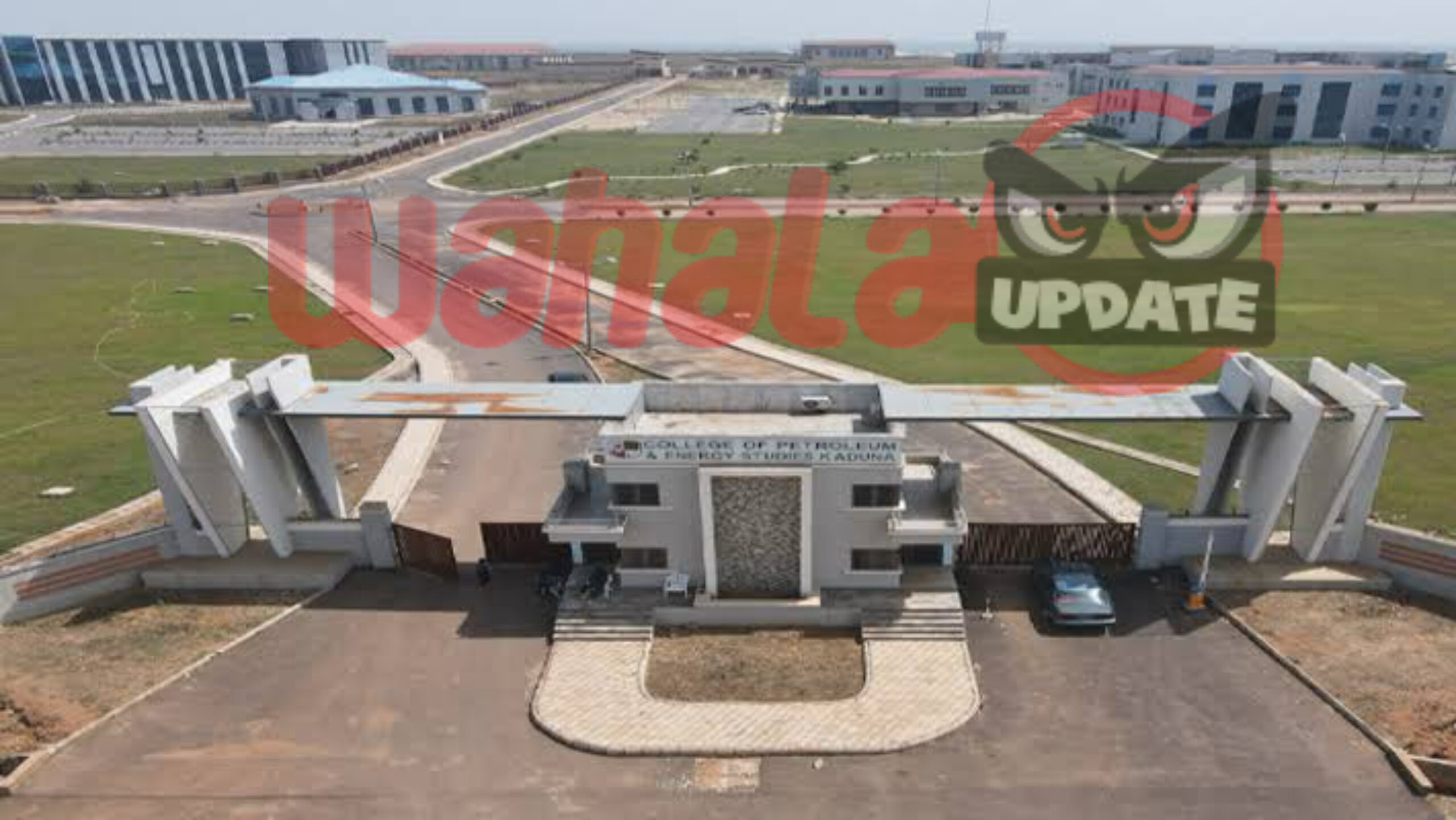
President Bola Ahmed Tinubu is set to commission the newly established College of Petroleum and Energy Studies, Kaduna (CPESK) July 21, 2025.
The move comes after CPESK received a provisional license allowing it to operate as a private postgraduate university.
Political Backing and Institutional Ambitions
Governor Uba Sani of Kaduna State confirmed the development during a Monday meeting with Ahmad Galadima Aminu, Executive Secretary of the Petroleum Technology Development Fund (PTDF), held at Sir Kashim Ibrahim House.
Sani expressed appreciation for the president’s support of the college’s vision.
He emphasized the college’s expected role in transforming Nigeria’s petroleum and energy sectors through advanced research and workforce development.
According to him, “We cannot make progress in a fast-changing and complex society if we fail to develop local capacity.”
The governor argued that CPESK, if properly supported, could cultivate the local talent necessary to reshape Nigeria’s petroleum industry significantly.
Kaduna Government’s Commitment and PTDF’s Role
The Kaduna State government pledged full support to ensure CPESK’s successful launch and ongoing operation.
Governor Sani encouraged the PTDF to seek assistance from the state as needed to facilitate smooth institutional performance.
PTDF Executive Secretary Aminu briefed Governor Sani on the college’s operational preparedness and outlined its ambitious academic goals.
Controversial Initiative Amid Nigeria’s Energy Challenges
Though the announcement signals progress in educational offerings, CPESK’s establishment is not without contention.
Critics question whether the college’s creation is a genuine effort to address Nigeria’s persistent challenges in the oil and energy sectors.
Or merely a political move to curry favor within Kaduna State and among oil industry stakeholders.
The petroleum sector in Nigeria remains plagued by underperformance, high corruption levels, and inefficient resource management.
Launching a new institution purported to reform and modernizes this sector invites scrutiny over accountability, curriculum quality, and leadership transparency.
Questions over Transparency and Impact
The rapid issuance of CPESK’s provisional license sparked concerns regarding regulatory due diligence.
Skeptics argue that the institution’s operational readiness might be more ceremonial than substantive.
There is unease about whether the college will offer meaningful, high-quality programs that translate into tangible improvements for Nigeria’s petroleum industry.
Further, hesitation prevails about how effectively CPESK can navigate Nigeria’s complex energy ecosystem.
Which has long suffered from a disconnect between academic institutions and practical industry needs.
Political Motives and Patronage Suspicions
Tinubu administration’s direct involvement in commissioning CPESK raises eyebrows about political patronage.
The timing coincides with growing calls for transparency in government contracts and appointments linked to the petroleum sector.
Observers suggest the college’s launch may serve as a platform to consolidate political influence.
Reward loyalists, or redirect energy revenues through controlled educational initiatives.
Governor Sani’s public commendation of Tinubu’s support fuels perception that CPESK is as much a political project as an academic one.
This politicization could undermine educational independence and public trust in the college’s mission.
The Need for Genuine Capacity Building
Nigeria urgently requires effective institutions to develop indigenous expertise in petroleum and energy.
The sector’s dominance over the national economy calls for comprehensive reforms, including rigorous research, innovation, and skilled workforce training.
For CPESK to fulfill its lofty goals, it must transcend political interference and focus on delivering evidence-based education, industry collaboration, and transparent governance.
Without these, it risks becoming yet another ivory tower disconnected from real-world challenges.
Kaduna’s Strategic Position
Kaduna stands strategically as Nigeria’s hub for technological advancement and industrial growth.
Hosting a petroleum-focused college aligns with state ambitions to attract investments and boost human capital.
But the state government’s promise of extensive support must translate into actionable policies ensuring CPESK’s sustainability beyond political cycles.
PTDF’s Academic Vision and Challenges
The PTDF’s involvement signals government intent to revitalize petroleum education.
However, past experiences with similar projects show that challenges funding shortfalls, bureaucratic delays, and political interference often hinder implementation.
Executive Secretary Aminu’s briefing highlighted plans for academic rigor and operational readiness.
Yet, many await concrete demonstration of these commitments through quality programs, robust faculty recruitment, and transparent admissions.
Public Expectations and Accountability
The Nigerian public and industry stakeholders expect CPESK to be a game-changer.
Success would mean improved domestic capacity, reduced reliance on expatriate experts, and better management of petroleum resources.
Failure would further damage trust in government-led reforms.
Given Nigeria’s troubled history with petroleum sector initiatives, CPESK’s future will be closely monitored.
Substantial evidence of effectiveness and accountability will be crucial to overcoming skepticism.
A Chance or a Public Relations Stunt?
However, political overtones and unanswered questions cloud its prospects.
For Nigeria’s sake, CPESK must rise beyond symbolic gestures and political gain to deliver measurable impact.
The government’s commitment must materialize into transparency, autonomy, and academic excellence.
Otherwise, the new college risks becoming a controversial footnote in Nigeria’s ongoing struggle with corruption and inefficiency in its vital petroleum industry.

2 Comments
4irybk
im01io