


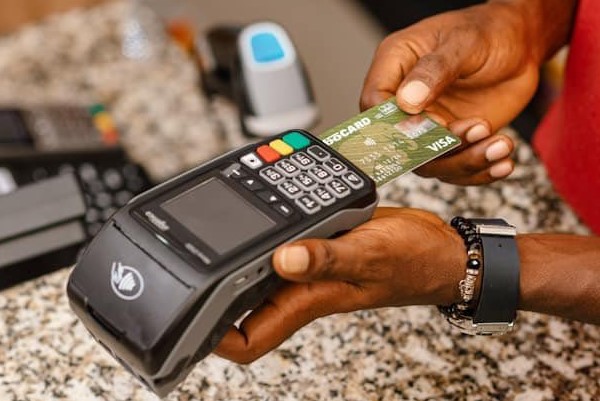
The Corporate Affairs Commission (CAC) has launched a fierce crackdown against unregistered Point-of-Sale (PoS) operators nationwide, December 6, 2025.
In a dramatic and unprecedented announcement on December 6, where the Commission exposed a creeping menace that threatens the integrity of Nigeria’s financial system.
Illegal PoS operations supported by reckless fintech companies.
This crackdown marks a turning point, igniting controversy and stirring conversations across the country’s digital and financial landscapes.
CAC’s Bold Move: Enforcing Nigeria’s Financial Laws
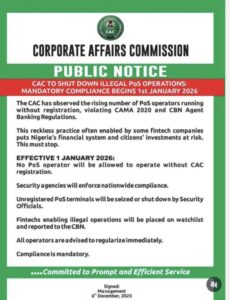
In a stern statement posted on its official Instagram page, the CAC warned all PoS operators.
Effective January 1, 2026, any PoS terminal running without full and verifiable registration will be forcibly shut down.
The Commission revealed it has observed an alarming rise in unregistered PoS services flouting the Companies and Allied Matters Act 2020 alongside Central Bank of Nigeria’s (CBN) Agent Banking Regulations.
These illegal operators expose millions of Nigerians, from bustling urban small business owners to the vulnerable rural communities, to enormous financial risks.
The CAC’s message was clear and uncompromising: this lawlessness would no longer be tolerated.
Reckless Fintechs Under Fire for Spreading Fraud
Most controversially, the CAC didn’t shy away from finger-pointing.
It accused several fintech companies of recklessly onboarding unregistered PoS agents without due diligence, actions that have dangerously fueled proliferation of illegal activities.
This reckless behaviour, according to the Commission, not only undermines regulatory frameworks but directly endangers Nigeria’s fragile financial ecosystem.
The fintech firms bear a heavy responsibility yet their negligence continues to deepen the problem.
The statement ominously warned that fintechs enabling such practices will be blacklisted and reported directly to the CBN, inviting heightened scrutiny and possible sanctions.
The Deadline: January 1, 2026 No Exceptions
The slide toward financial chaos will be stopped dead from January 1, 2026.
The CAC vowed that security forces across the nation will enforce compliance, with unregistered PoS terminals seized or shut down on the spot.
From 1 January 2026, no PoS operator operates without CAC registration.
Security agencies will enforce nationwide compliance.
Security officials will seize or shut down unregistered PoS terminals,” the Commission declared.
The crackdown delivers a powerful ultimatum to operators who have previously flown under the radar.
Risks to Nigeria’s Financial Health are Real, Urgent
The crackdown is much more than mere bureaucracy.
It responds to mounting public concerns over the surge of fraud linked to PoS transactions.
Bamisile revealed that his committee received disturbing reports about unprofiled agents, cloned PoS terminals, anonymous transactions, and lax identity verification practices (KYC).
These vulnerabilities leave millions exposed to cybercrime, financial losses, and security breaches.
His warnings echo the CAC’s call for swift and decisive action.
Without urgent intervention, Nigeria risks piloting an unregulated, insecure financial landscape where fraudsters thrive unchecked.
What This Means for Nigerians and Businesses
For Nigerian businesses, this crackdown means betting on compliance or facing business closure.
Many small merchants rely heavily on PoS terminals for daily operations, but thousands of these terminals reportedly lack proper registration.
For readers and users, the crackdown places the spotlight on fintech companies, the middlemen enabling this shadow industry.
How recklessly fintechs onboard agents without proper checks reveals systemic negligence impacting millions.
As the January deadline looms, Nigerians must engage, question, and demand transparency from both regulators and fintechs.
Why This Story Matters: The Bigger Picture
The unchecked growth of unregistered PoS agents symbolizes deeper cracks in governance, financial inclusion, and cybersecurity.
It’s a story that strikes at the heart of every Nigerian’s wallet, challenging trust in fintech progress and government oversight.
Will fintechs clean up their acts, or continue enabling risky frontiers?
Will the government enforce laws consistently or allow continued loopholes?
The stakes could not be higher.
Join the Conversation: Protect Your Money and Demand Accountability
Nigerians, advocate now for safer fintech environments.
Social media will play a critical role in holding all parties accountable.
Share your voice and stay informed.
