


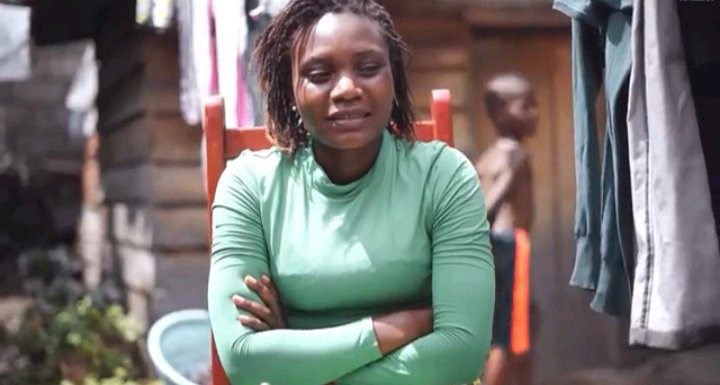
Furaha, a young woman from the Democratic Republic of Congo, has come forward with a harrowing and deeply personal account of family breakdown, anger, and lasting regret.
According to reports, her story marked by betrayal and a desperate plea for forgiveness, sheds light on the complex web of emotions and misunderstandings that can tear families apart.
A Childhood Interrupted
Furaha’s troubles began at the tender age of six, when her parents’ marriage collapsed.
Her mother, who had married young, chose to leave Furaha’s father and start anew.
The decision to divorce, Furaha recalls, was abrupt and traumatic, not only for her, but for the entire extended family.
“I remember the day my father left,” Furaha says. “I didn’t understand why, and nobody explained it to me. Suddenly, he was just gone.”
For many children in the Democratic Republic of Congo and elsewhere, divorce remains a taboo, often cloaked in shame and secrecy.
Furaha’s experience was no different. She was left to process her confusion and hurt largely on her own, while her mother struggled to find stability for the two of them.
A New Home, A New Threat
Within a year, Furaha’s mother remarried, introducing a new figure into their household, a stepfather whom Furaha never trusted. “He was not kind to me,” she recalls.
“Whenever my mother was away, he would say things and do things that made me feel very uncomfortable.”
Furaha alleges that her stepfather’s behavior crossed boundaries, leaving her feeling unsafe in her own home.
Desperate for help, Furaha turned to the only person she believed could protect her: her mother. But her pleas fell on deaf ears.
“Each time I told my mother, she accused me of making up stories, of trying to break up her marriage.
She said I was jealous and wanted to ruin her happiness.” The pain of not being believed was, for Furaha, almost as sharp as the abuse itself.
In one particularly distressing episode, she sought refuge with her grandmother, only for her mother to forcibly bring her back.
The Weight of Betrayal
The emotional toll on Furaha was immense.
Alienated from her biological father, dismissed by her mother, and isolated within her new family, she found herself consumed by resentment.
“My mother cut off all contact with my father. I was not allowed to see him or even talk to him on the phone.
It was like she wanted to erase him from my life completely.” This sense of loss festered, fueling a dangerous bitterness.
It is in this context of confusion, pain, and longing for justice that Furaha made the decision that would alter her life forever.
She describes it as an act of “revenge”, a misguided attempt to hurt her mother in the way she herself felt hurt. “I wanted her to feel the pain I felt.
I wanted her to know what it was like to lose trust, to feel betrayed.”
A Secret Unravels
The details of what happened next are difficult for Furaha to recount.
In a moment of anger and despair, she initiated an inappropriate relationship with her stepfather, the very man she had always feared and distrusted.
“At the time, I told myself I was taking control, that I was punishing my mother.
But looking back, I see how wrong I was. I only hurt myself more.”
The secret did not remain hidden for long. A series of messages exchanged between Furaha and her stepfather came to light, exposing the situation to her mother and the wider family.
The fallout was immediate and devastating. Furaha was thrown out of the house, and her mother swiftly filed for divorce from the stepfather.
Isolation and Regret
In the years that followed, Furaha’s life was marked by instability and shame. S
he moved between relatives’ houses, struggling to find acceptance or forgiveness.
“Some people blamed me, others blamed my mother or my stepfather.
But nobody really wanted to talk about what happened. It was like I became a stain on the family name.”
Local pastors and community leaders attempted to mediate between Furaha and her mother, hoping to heal the deep wounds.
But reconciliation proved elusive. “My mother refuses to forgive me.
She says I destroyed her happiness and brought shame to our family. I have tried to apologize so many times, but she won’t even speak to me.”
Furaha’s regret is palpable. “If I could go back, I would never have done what I did.
I let my anger and pain control me, and I made a terrible mistake.
How I wish I had found another way to deal with my feelings. I wish someone had listened to me.”
The Role of Family and Community
Furaha’s story is, sadly, not unique. In many Congolese communities, issues of abuse, blended families, and intergenerational trauma are often shrouded in silence.
Children’s voices are frequently marginalized, while adults are expected to maintain appearances at all costs.
According to social workers in Kinshasa, cases like Furaha’s highlight the urgent need for better communication within families and more robust support systems for vulnerable children.
“When a child reports abuse or mistreatment, take them seriously,” one counselor urges.
“Dismissing their concerns can have lifelong consequences, both for the child and for the entire family.”
Open dialogue and professional counseling matter greatly.
In Furaha’s case, a lack of understanding between mother and daughter allowed resentment to fester and ultimately explode into tragedy.
“If someone had helped us talk, maybe things would have been different,” Furaha reflects.
“Maybe my mother would have believed me, or at least tried to understand why I was so unhappy.”
A Plea for Forgiveness
She has built a modest life for herself, but the scars of her past remain.
“Every day, I think about my mother. I pray that one day she will forgive me, that we can have a second chance.”
Her message to others who may be struggling with family conflict is simple: “Don’t let anger guide your actions.
Talk to someone. Ask for help. Don’t make decisions when you are hurting, because you may do things you can never take back.”
Furaha’s church community has rallied around her, offering support and encouragement.
“She wants to break the cycle of silence.
By sharing her story, she is helping others understand the importance of forgiveness and compassion.”
The Road Ahead
For Furaha, the journey toward healing is ongoing.
She continues to write letters to her mother, expressing her remorse and longing for reconciliation.
“I don’t know if she will ever answer. But I have to keep trying.
She is my mother, and I love her, no matter what has happened.”
Her story reminds us poignantly: Family relationships shape our lives profoundly, and broken trust devastates.
It also underscores the resilience of the human spirit, even in the face of deep regret.
As Furaha looks to the future, she hopes her story will inspire others to seek help, to speak openly about their pain, and to choose forgiveness over retaliation.
“We all make mistakes,” she says. “But we can also choose to heal.”
