


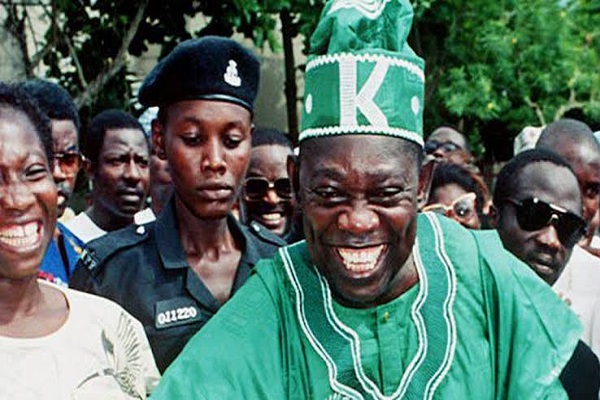
The annulment of Nigeria’s June 12, 1993, presidential election remains one of the most poignant and defining episodes in the nation’s complex pursuit of democratic governance June 4, 2025.
Widely regarded as a watershed moment, this election exposed the fragility of military-led political transitions and underscored the power of popular will in a deeply divided country.
At a time when Nigeria was grappling with deep ethno-religious divisions and widespread political distrust, the June 12 election emerged as a beacon of hope.
The electorate rallied overwhelmingly behind Moshood Kashimawo Olawale (MKO) Abiola, the Social Democratic Party (SDP) candidate, whose campaign resonated across regional, ethnic, and religious lines.
His appeal transcended traditional divides, setting a new benchmark for national unity and democratic participation.
Abiola’s main opponent, Bashir Tofa of the National Republican Convention (NRC), represented the establishment and enjoyed significant support in the North.
However, the election results revealed an unprecedented shift.
Abiola not only secured a decisive victory nationwide but also won in Kano, Tofa’s home state.
This cross-regional support was a powerful indicator of Nigerians’ collective desire to prioritize national progress over parochial loyalties.
Transparency and Credibility
One of the most remarkable features of the June 12 election was the use of the Option A4 voting system.
This method required voters to queue openly behind their preferred candidate or party symbol, minimizing opportunities for electoral fraud and manipulation.
The transparency of this system earned widespread praise from both local and international observers.
These are people who hailed the election as Nigeria’s freest and fairest to date.
Despite a voter turnout of approximately 35%, the election was widely acclaimed for its fairness and credibility.
The open voting process fostered a sense of accountability and trust in the electoral system, setting a standard that subsequent elections have struggled to match.
The Annulment and Its Aftermath
Tragically, instead of ushering in a new democratic era, the military government abruptly annulled the election results.
This decision shocked the nation and the international community alike.
While lunging Nigeria into political uncertainty and unrest.
The annulment sparked widespread protests, civil disobedience, and a prolonged crisis that would shape the country’s political landscape for decades.
The military’s refusal to recognize Abiola’s overwhelming victory not only undermined the democratic process but also dealt a severe blow to national morale.
It exposed the limits of military tolerance for civilian political expression and highlighted the challenges of transitioning from military to civilian rule.
MKO Abiola: Symbol of Democratic Aspirations
Though his victory was never officially acknowledged, MKO Abiola became a symbol of Nigeria’s democratic aspirations and the struggle for credible governance.
His campaign and the election itself demonstrated the potential for unity in a nation often divided by ethnicity and religion.
Abiola’s legacy continues to influence Nigeria’s political discourse and electoral reforms.
Continuing Relevance Today
More than three decades later, the June 12 election remains a benchmark against which Nigeria measures its democratic progress.
It serves as a reminder of both the possibilities and pitfalls of the country’s political journey.
Election legacy urges parties regain trust, redefine roles.
PDP’s May 27 NEC meeting promises pivotal decisions.
As the party aims to regain political momentum and address the challenges facing Nigeria’s democratic institutions.
Lessons and Challenges
It also underscored the importance of respecting the popular mandate and the dangers of political interference.
Despite the setbacks, the election demonstrated that Nigerians are capable of transcending ethnic.
And this is religious divisions in pursuit of a common democratic goal.
The widespread support for Abiola reflected a collective yearning for transparent leadership and effective governance.
A Legacy of Hope and Caution
June 12, 1993 election testifies Nigeria’s democratic potential, people’s enduring voice
Annulment hurt democracy, yet election symbolizes hope, unity, governance.
They remind leaders and citizens alike of the importance of upholding electoral integrity.
Respecting the will of the people, and fostering national unity in the face of diversity.
Nigeria reaffirms democratic commitment honoring sacrifices and aspirations.

1 Comment
Pingback: Supreme Court Dismisses Al-Mustapha Kudirat Abiola Murder Case - wahalaupdate