


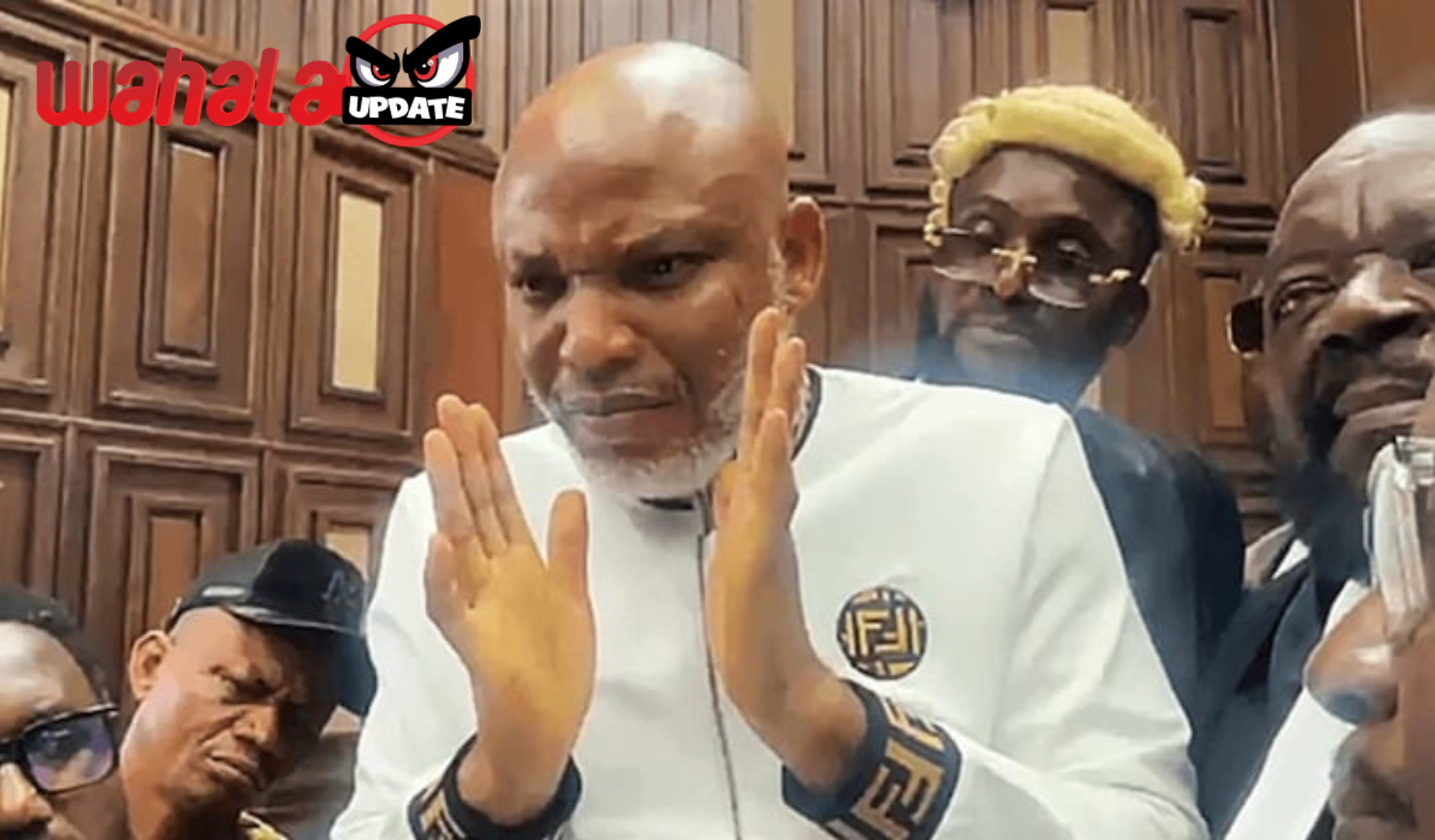
On November 20, 2025, in Abuja, the Nigerian judiciary handed down this harsh sentence to Nnamdi Kanu, the head of the Indigenous People of Biafra (IPOB).
The court’s decision came after years of legal battles filled with tension, political manipulation, and controversial court proceedings.
The judge found that Kanu’s broadcasts, directives, and activities had incited violence and bloodshed in southeastern Nigeria, an area already scarred by ethnic conflict and separatist tensions.
The Court’s Controversial Ruling
The court described Kanu’s actions as not only provocative but deliberately aimed at destabilizing Nigeria’s sovereignty.
Judge James Omotosho was clear: Kanu’s broadcasts, especially on Radio Biafra, were acts of incitement, violence, and rebellion.
The judge stated, “Mr. Kanu was aware of his actions; he was determined to execute these threats without regard for his community.”
Although prosecutors had initially pushed for the death penalty, seeking justice for the countless lives lost.
The judge surprisingly opted for life imprisonment, citing “global trends against capital punishment.”
Many saw this as a lame excuse to shield Nigeria’s notorious human rights record from more brutal judgments.
The Verdict That Shocked a Nation
Nnamdi Kanu is the reasons many hypocritic politicians might want to celebrate.
The controversial separatist leader has just been hit with a devastating verdict.
Convicted on seven terrorism charges and sentenced to life imprisonment by a Nigerian court.
This development has ignited a fierce debate across social media, with many expressing outrage, disbelief, and outright anger at what they see as a miscarriage of justice.
An Outcry of Outrage
The verdict isn’t just a legal victory for the Nigerian government.
It’s a political bombshell that has many questioning the true motives behind the court’s pronouncement.
Critics argue that this trial was a sham, a show trial designed to silence dissent and quell the voice of Nigerian independence fighters.
Supporters of Kanu accuse the government of using this case to intimidate and silence anyone fighting for self-determination.
They call out the hypocrisy of a government that claims to uphold democracy but swiftly condemns a man for speaking his mind, no matter how controversial.
The Personal Flare of Nnamdi Kanu
Kanu’s story is not a typical criminal saga. It’s a saga of betrayal, resilience, and defiance.
Since his re-arrest in Kenya in 2021, he has remained a symbol of resistance for many in Nigeria’s oppressed southeastern region.
His broadcasts, which are often fiery and provocative, have sparked both admiration and outrage.
Kanu’s refusal to recognize the legitimacy of Nigeria’s federal government has made him a hero to some and a villain to others.
Many see him as a freedom fighter, someone brave enough to challenge Nigeria’s government even at the risk of his own life.
In court, Kanu’s silence was deafening.
He refused to partake in his defense, asserting that his trial was a sham and that he was denied a fair hearing.
Still, the court found him guilty beyond any doubt, despite his absence from the courtroom during most of the proceedings.
The Reaction Across Nigeria and Beyond
The ruling has ignited a firestorm of reactions, both within Nigeria and internationally.
Supporters have stormed social media, calling it an injustice.
A violation of his human rights, and a clear attempt to crush the Biafran independence movement.
Many accuse the Nigerian government of lawmaking that remains heavily skewed toward suppression rather than justice.
Some Nigerians worry that this verdict will set a dangerous precedent, one where speaking out against government tyranny could result in life imprisonment or worse.
Others, however, applaud the court for “upholding Nigeria’s sovereignty”, a stance that many critics believe is a thinly veiled justification for authoritarian rule.
The Controversial Legacy of Nnamdi Kanu
Kanu’s conviction is a clear signal: Nigeria’s government is willing to use heavy-handed tactics to silence its critics.
But more than that, it exposes the deep-rooted issues of injustice, inequality, and oppression that continue to plague Nigeria’s political landscape.
Kanu’s case is not just about one man, it’s about the future of free speech, democracy, and human rights in a nation facing an identity crisis.
The question now remains: will Nigeria’s government learn from this verdict, or will it further escalate tensions and deepen divisions?
A Call for International Attention
This case has potential to become a global flashpoint.
Human rights groups across the world already denounce Nigeria’s treatment of Kanu.
Highlighting allegations of mistreatment, arbitrary detention, and unfair trials.
Many fear this verdict will accelerate Nigeria’s descent into authoritarianism.
Setting a dangerous precedent for other opposition figures and activists.
But the question remains: will the international community step in, or will Nigeria continue to act with impunity?
Who Will Win the Battle?
This verdict marks a turning point, but it is not the end.
The road ahead is fraught with uncertainty.
Kanu has 90 days to appeal, the same period his supporters are calling for worldwide protests to demand his release.
Many Nigerians are split, some celebrate what many see as justice, others mourn what they believe to be a grave injustice.
Either way, one thing is clear: Nnamdi Kanu’s name will remain in the headlines, and in the hearts of millions, long after this verdict.
A Nation Divided
The Nigeria of today is a nation teetering on the brink.
What does the future hold for those fighting for independence?
Can Nigeria truly be united when voices like Kanu’s are silenced?
As the world watches, the controversy continues to heighten, highlighting Nigeria’s promising yet fractured future.
This case isn’t just about Kanu, it’s about Nigeria’s soul.
Will the nation move toward justice and democracy, or will it drown in authoritarian darkness? Only time will tell.
Join the Conversation!
What do you think about Nnamdi Kanu’s conviction?
Is justice served or an attack on freedom?
Drop your comments below!

2 Comments
Pingback: IPOB Leader Nnamdi Kanu Bans Broadcasts, Fees for Prison Visits - wahalaupdate
Pingback: Ex-President Sentenced To Life Imprisonment - wahalaupdate