


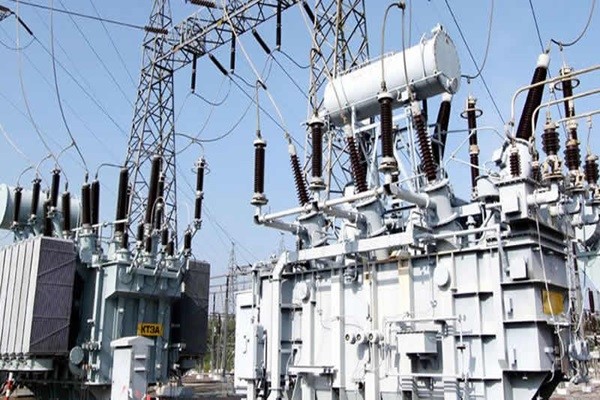
Nigeria grappled with yet another crippling power outage on Tuesday, January 27, 2026, as the national electricity grid suffered its second collapse in less than a week.
Real-time data from the Nigerian Independent System Operator (NISO) confirmed that power allocation to all 11 electricity distribution companies (DisCos) plummeted to zero megawatts by 11:00 a.m., plunging millions into darkness and disrupting economic activities nationwide.
This incident, four days after January 23 grid failure, underscores fragility of Africa’s most populous nation’s power infrastructure.
Electricity supply to major DisCos halted abruptly, affecting homes, hospitals, factories, and businesses from Lagos to Maiduguri.
The Transmission Company of Nigeria (TCN), responsible for grid management, has yet to issue an official restoration timeline.
But preliminary reports point to a system disturbance in the transmission network, possibly linked to generation deficits or line faults.
Timeline of the Latest Collapse and Immediate Fallout
The blackout struck without warning, compounding hardships in a country where reliable electricity remains a luxury.
By midday, social media platforms buzzed with frustration from residents and business owners, many resorting to costly generators amid soaring fuel prices.
In Lagos, Africa’s commercial hub, traffic lights failed, causing gridlock on major arteries like the Third Mainland Bridge.
Abuja’s government offices and hospitals switched to backups, while in the North, irrigation pumps for dry-season farming stalled, threatening food security.
Industrial clusters in Aba and Kano reported losses running into millions of naira per hour.
This event echoes December 2025 collapse, lasting 48 hours, costing economy ₦10 billion daily, per MAN.
Analysts warn that repeated failures erode investor confidence and exacerbate Nigeria’s ₦2.5 trillion annual power sector subsidy burden.
Historical Context: A Pattern of Grid Instability
Nigeria’s 330kV/132kV national grid, spanning 20,000 kilometers, collapsed 200 times since 2010, averaging annually..
The current spate, two in one week, revives painful memories of the 2023 “blackout year,” when 12 failures occurred amid vandalism and underinvestment.
Privatized in 2013, the sector promised transformation, yet challenges persist: aging infrastructure.
Gas supply shortages to thermal plants (which generate 80% of power), and vandalism of transmission lines.
The grid’s installed capacity hovers at 13,000MW against a demand exceeding 25,000MW, with actual supply often below 5,000MW.
Recent interventions, like the World Bank-funded Nigeria Electrification Project, aimed to add 1,000MW via solar hybrids, but systemic issues undermine gains.
The latest collapse follows NDPHC’s announcement of 450MW restoration from Geregu NIPP maintenance, highlighting the short-lived nature of such fixes.
Government Responses and Recent Reforms
Power Minister Adebayo Adelabu, appointed 2023, champions Siemens-backed “Presidential Power Initiative,” targeting 25,000MW by 2027.
Yet, critics argue implementation lags: only Phase 1 (7,000MW) nears completion, bogged down by forex shortages for equipment imports.
TCN’s Executive Vice Chairman, Abdulaziz Abubakar, attributed the January 23 collapse to a “frequency drop from sudden generation loss.”
Restoration took 12 hours, but no root-cause analysis was publicized.
For Tuesday’s event, TCN activated reserves and black-start at Afam, Sapele, restoring partial Lagos, Abuja supply.
The Nigerian Electricity Regulatory Commission (NERC) monitors compliance, fining DisCos ₦200 million last month for poor service.
President Tinubu’s administration touts ₦1.4 trillion investments since 2023, including SCADA upgrades, yet grid collapses persist.
Economic and Social Ramifications
Hospitals like Lagos University Teaching Hospital rely on diesel generators, inflating care costs amid 35% inflation.
In agriculture-dependent regions, outages halt cold chains, spoiling produce worth billions.
Education suffers too: e-learning platforms crash, widening the digital divide.
Environmentally, diesel fumes from 40 million generators emit more CO2 than South Africa’s power sector.
Economically, MAN estimates a 4% GDP drag from power woes, deterring FDI.
Multinationals like Unilever have cited unreliability for scaling back operations.
Expert Analysis and Stakeholder Reactions
Energy expert Prof. Yemi Oke, of the University of Lagos, blamed “under-frequency load shedding failures and weak interconnector ties.”
He called for decentralized mini-grids, noting Rwanda’s success with 70% renewable access.
TCN issued a statement promising full restoration by midnight, while DisCos like Ikeja Electric urged patience.
Opposition voices, including PDP’s Atiku Abubakar, criticized the APC government on X: “Grid collapses are now weekly, where is the change?”
Civil society groups like BudgIT demanded transparency on the ₦3 trillion power budget since 2015.
NDPHC defended its Geregu upgrade, insisting deeper transmission reforms are needed.
International partners, including the African Development Bank, pledged $500 million more for grid hardening, conditional on reforms.
Looking Ahead: Pathways to Grid Stability
The 2026 Electricity Act amendments propose state-level grids, potentially bypassing the national bottleneck.
President Tinubu’s recent ₦100 billion grid intervention fund could fund 10 new substations if judiciously deployed.
Success hinges on political will, inter-agency coordination, and public-private synergy.
As lights flicker back on, Nigerians yearn for a future without “national blackouts.”
This week’s double collapse is a clarion call: stabilize the grid, or risk perpetual darkness stifling the nation’s potential.

2 Comments
Pingback: ADC Chieftain Alarms Over AEDC Poll Outage Plan - wahalaupdate
Pingback: Aso Rock disconnected from national grid -Obi slams Tinubu - wahalaupdate