


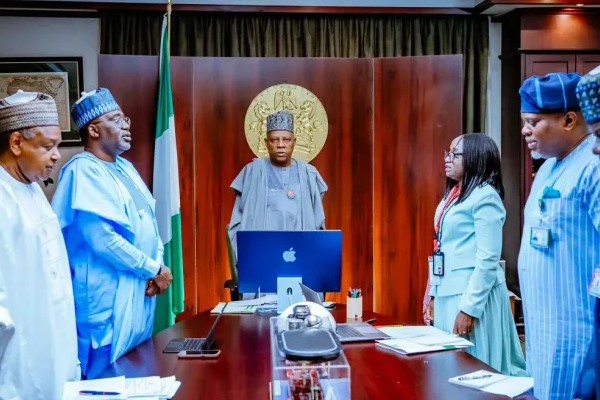
The National Economic Council’s (NEC) approval of a N100 billion fund for Rehab training institutions for Nigeria’s police and security agencies, December 3, 2025.
The approval, subject to President Bola Ahmed Tinubu’s final ratification, happened during NEC’s 154th virtual meeting on December 3.
It marks a crucial step toward improving the country’s security infrastructure amid widespread training facility decay.
The information comes from official NEC communiques and statements made by key government figures.
Including Governor Peter Mbah of Enugu State, Chair of the ad-hoc committee, and Vice President Kashim Shettima, NEC Chair.
Their remarks during the meeting reveal the administration’s stance on urgent reforms and accountability.
NEC’s Historic Approval Sparks Heated Debate
The announced N100 billion allocation seems optimistic but raises questions on past mismanagement of security funds.
Critics argue this move echoes empty promises from previous administrations with little concrete progress.
The ad-hoc committee’s dire assessments don’t surprise many Nigerians familiar with chronic facility neglect.
Meanwhile, the N2.6 billion earmarked for consultancy services appears a costly bureaucratic layer rather than direct investment.
This move fuels suspicion toward wasteful spending and delayed impact on trained security personnel quality.
Nigerians demand transparency in how funds will be channeled and monitored.
Governor Mbah’s urgent calls for repair underscore the scandalous neglect of critical national security training centers.
Yet, this approval may be more symbolic than structural, if not followed by real on-ground action.
The balancing act between rhetoric and execution remains contentious.
President Tinubu’s Vision or Political Theater?
President Tinubu’s earlier proposal at the 152nd NEC meeting stressed overhauling security training, a commendable point amid persistent insecurity.
However, skeptics question whether this commitment will translate beyond speeches into tangible reforms.
Political grandstanding often diverts attention from systemic reform delays.
While institutional revamps are overdue, challenges linger around operational efficiency, corruption, and political will.
Past initiatives with similar agendas largely failed, generating public disillusionment.
This approval could falter under entrenched bureaucratic inertia and vested interests resisting change.
Tinubu’s administration faces mounting pressure to prove this isn’t just another headline but a national security turning point.
Nigerians crave effective training that builds well-equipped security forces ready to counter threats realistically, not just theoretical plans.
Vice President Shettima’s Tough Talk: Words vs. Action
His message on governance impact resonates widely: citizens demand results, not excuses. Yet, words must swiftly follow action to validate his firm stance.
Shettima’s appeal for all government tiers to focus on implementation exposes long-standing frustrations with empty reforms.
The call to “engineer progress” challenges leadership and agencies complacent in their roles.
This message fuels hope but simultaneously raises skepticism about bottlenecks blocking change.
Despite vocal commitments, the public’s patience wanes as insecurity worsens.
The pressure mounts for concrete execution plans that translate policy into safer communities.
Shettima’s tough talk sets a high bar that requires rapid follow-up.
Controversies Around Fund Allocation and Oversight
The N2.6 billion consultancy Rehab fund approval invites controversy.
Many view consultants as added middlemen prone to increasing project costs without accountability.
Past consultancy deals in Nigeria often resulted in inflated expenses with minimal deliverables.
Questions swirl on whether the consultancy roles will ensure effective fund utilization or simply create avenues for corruption.
Civil society groups argue for transparent procurement and regular audits.
Without such measures, citizens fear another case of taxpayer money misuse.
Nigerians closely watch the Rehab fund’s conversion into tangible improvements.
Broader NEC Actions and Nigeria’s Development Trajectory
Alongside security funding, NEC updates show mixed progress in other sectors.
The polio eradication campaign reflects Nigerian health gains with significant case declines.
Yet, persistent challenges remain to sustain immunization momentum in vulnerable regions.
The domestic gas sector update reveals issues around debt and payment delays, highlighting industrial supply chain fragility.
Energy and health successes contrast with skepticism over oversized security project budgets.
Comprehensive governance reform remains necessary for balanced national growth.
VP Shettima’s closing remarks linked economic and security reforms, underscoring the need for integrated policy execution.
Reforms must benefit citizens tangibly across sectors to legitimize government efforts and build public trust.
What Nigerians Demand: Transparent Reform and Real Impact
For Nigeria’s public, the NEC Rehab funding approval triggers hope tinged with caution.
Citizens demand detailed action plans, transparency, and timely fund disbursement.
They insist on measurable improvements at neglected security institutions.
Nigerians question if this budget approval signals genuine change or just political posturing.
Wahalaupdate urges citizens and watchdogs to hold government accountable.
Transparency and swift execution are vital for transforming this funding into safer communities with professional security forces.
The clock is ticking.
