


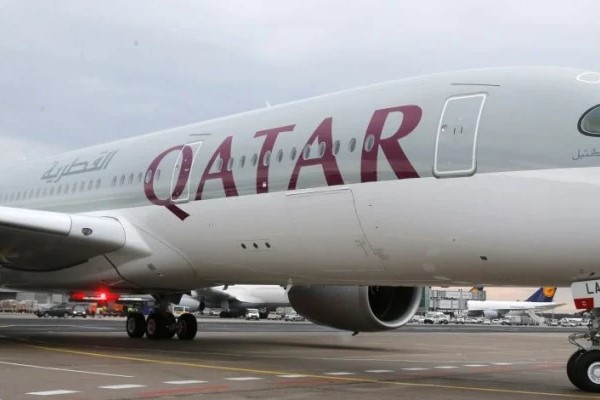
In a dramatic turn of events that underscored the vigilance of Nigeria’s aviation emergency systems, a Qatar Airways aircraft carrying 248 passengers and 12 crew members executed a successful emergency landing at Murtala Muhammed International Airport (MMIA) in Lagos late Friday night.
The incident, triggered by a mid-air technical fault, was resolved without injuries, thanks to swift coordination between the airline, airport authorities, and the Lagos State Emergency Management Agency (LASEMA).
Incident Overview
The flight, en route from Doha to Lagos, encountered unspecified technical issues while airborne within Nigerian airspace.
According to a statement from LASEMA, signed by Permanent Secretary Olufemi Oke-Osanyintolu, distress alerts were promptly received via the agency’s 767/112 toll-free emergency lines.
This triggered an immediate activation of the state’s comprehensive emergency response plan, mobilizing response teams to the airport.
Eyewitnesses described a tense atmosphere as fire trucks, ambulances, and medical units lined the runway in anticipation.
“It was like something out of a movie,” recounted one airport worker who spoke to reporters on condition of anonymity.
“Sirens blaring, lights flashing, everyone was on high alert, but the plane touched down smoothly.”
Preliminary reports indicate the aircraft, a modern wide-body jet typical for Qatar Airways’ long-haul routes, signaled distress shortly after entering Nigerian airspace.
The pilot’s professionalism was repeatedly praised by officials, who noted the safe execution of the landing procedure despite the high-stakes scenario.
LASEMA’s Rapid Response
LASEMA’s Command and Control Centre in Alausa, Ikeja, played a pivotal role.
Upon receiving the alerts, the agency orchestrated a multi-agency response involving the Federal Airports Authority of Nigeria (FAAN), Nigeria Civil Aviation Authority (NCAA), airport rescue and fire-fighting services, and medical personnel.
“Our teams were on site within minutes,” Oke-Osanyintolu stated.
“The coordinated effort prevented what could have escalated into a major aviation disaster.”
Post-landing assessments revealed no significant structural damage to the aircraft.
Engineering crews conducted thorough inspections on the apron before authorizing its movement for repairs.
All 260 souls on board, 248 passengers and 12 crew, were safely evacuated, with no casualties or injuries reported.
Recovery operations concluded swiftly, securing the aircraft and restoring normal runway operations.
The statement highlighted: “The pilot executed a safe landing on the runway at MMIA with LASEMA response teams and other emergency responders on standby.
All passengers were evacuated safely.”
Pilot and Crew Commended
Central to the incident’s positive outcome was the flight crew’s expertise.
LASEMA commended the captain for maintaining composure and adhering to standard emergency protocols.
Aviation experts emphasize that such maneuvers require precise execution, especially under the pressure of a fully loaded aircraft.
In the broader context of global aviation, emergency landings due to technical faults are not uncommon but demand flawless execution.
Data from the International Air Transport Association (IATA) shows that pilot training and aircraft redundancy systems contribute to a 99.999% safety record for commercial flights.
This incident aligns with that statistic, serving as a testament to Qatar Airways’ rigorous standards and the airline’s modern fleet maintenance practices.
Airport and Regulatory Response
MMIA, one of Africa’s busiest airports handling over 15 million passengers annually, demonstrated resilience.
FAAN Director of Public Affairs, Odunayo Oladiji, confirmed that runway operations resumed without delay, minimizing disruptions to the Friday night schedule.
Qatar Airways issued a brief statement expressing gratitude to ground teams and assuring passengers of ongoing investigations.
The NCAA, Nigeria’s aviation regulator, has launched a mandatory occurrence investigation per Annex 13 of the Chicago Convention.
This will examine flight data recorders, maintenance logs, and air traffic control communications to determine the fault’s root cause, potentially hydraulic, electrical, or sensor-related issues common in high-altitude flights.
Passenger Experiences and Eyewitness Accounts
Passengers, a mix of business travelers, families, and tourists, shared harrowing yet relieved accounts.
“We heard the engines change pitch, then the captain came on announcing the diversion,” said Aisha Bello, a Lagos-based entrepreneur returning from a conference.
“Prayers were going up everywhere, but the crew kept us calm.”
Another passenger, UK national James Harper, posted on social media: “Heart in mouth, but Qatar Airways staff were pros.
Landed safe in Lagos, shoutout to Nigerian emergency services!”
Videos circulating online captured the aircraft’s controlled descent, with visible runway lights guiding it in.
Eyewitnesses at the airport, speaking to Punch newspaper, described “tense moments” as responders positioned strategically.
One ground handler noted the aircraft’s “tattered” approach, likely due to the fault, but praised its stable touchdown.
Broader Implications for Nigerian Aviation Safety
This event highlights ongoing improvements in Nigeria’s aviation emergency infrastructure.
Since the 2018 Lagos runway incursion and other incidents, LASEMA has invested in advanced monitoring tech, including drone surveillance and AI-driven alert systems.
Oke-Osanyintolu reassured the public: “LASEMA remains ever-ready to respond to any emergency, 24/7.”
Comparatively, Nigeria’s aviation safety has advanced markedly.
Qatar Airways, a five-star IATA-rated carrier, operates 14 weekly flights to Lagos, underscoring the route’s economic importance amid Nigeria’s oil and trade ties with the Gulf.
However, experts call for sustained investment. “Events like this test systems but also reveal gaps,” said aviation analyst Chukwuma Nwosu.
“Enhancing real-time satellite monitoring could preempt issues.”
The incident also spotlights crew training, with Qatar’s Doha-based simulators simulating Nigerian weather patterns.
Airline and Government Statements
Qatar Airways’ CEO, in a follow-up release, affirmed: “Safety is our paramount priority.
We thank our crew and partners for an exemplary response.”
LASEMA concluded its statement optimistically: “The aircraft has been secured on the apron, recovery activities completed, and the rescue operation safely concluded. No significant damage reported.”
Lessons Learned and Future Safeguards
Incidents like this reinforce the “Swiss cheese model” of aviation safety, layered defenses preventing failure.
Here, pilot skill, ATC guidance, and ground readiness aligned perfectly.
or Nigeria, it bolsters confidence in handling international traffic amid growing air travel demand projected at 10% annually.
As investigations unfold, stakeholders anticipate recommendations for enhanced pre-flight checks or fleet upgrades.
Passengers can take solace: aviation’s safety evolution continues, turning potential tragedies into testimonials of human and systemic ingenuity.
