


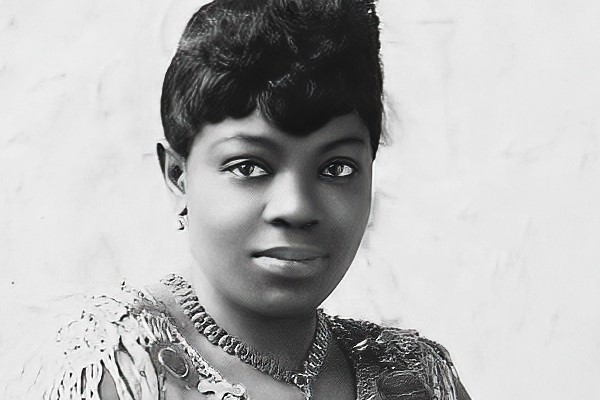
In an era when Black voices were silenced on world stages, one woman sang loud enough to echo through history.
Matilda Sissieretta Jones, the first African-American to perform at Carnegie Hall, wasn’t just an opera singer, she was a revolutionary.
Dubbed “The Black Patti” after the white diva Adelina Patti, her voice conquered Europe and America, proving talent knows no color.
Today, as we celebrate Black excellence in music from Beyoncé to Burna Boy, Matilda’s story reminds us: Pioneers paved the way.
From Charleston Slums to Vocal Prodigy
Born Matilda Joyner on January 5, 1868 (some sources say 1866), in Portsmouth, Virginia, she entered a post-Civil War world still scarred by slavery.
Her parents, Benjamin Richard Joyner, a free-born barber and Union Army cook, and Henrietta Beatrice, a washerwoman, moved the family to Providence, Rhode Island, chasing opportunity.
By age 6, Matilda’s voice stunned churchgoers at the African Methodist Episcopal Meeting House, her soprano soaring like a bird breaking free.
Talent scouts spotted her early.
At 14, she trained under New York vocal coach Ludovico Danzini, mastering Italian arias while ironing clothes to fund lessons.
Marriage at 16 to David Richard Jones, a hotel bellman, didn’t dim her fire, they toured as a duo.
By 1887, at 18, she debuted professionally in Providence, earning rave reviews.
“A voice of remarkable purity.” From slums to spotlights, Matilda’s grit set the stage for glory.
Who knew a teen mom would redefine opera? #FromRagsToRiches #BlackExcellence
Conquering New York: Carnegie Hall Glory in 1893
America’s opera world was a fortress whites only. But Matilda stormed the gates.
In 1888, she performed at Wallack’s Theatre in New York, silencing skeptics with Puccini and Verdi.
Critics raved: “Equal to the greatest living prima donnas.”
Europe beckoned next. In 1890, she toured the UK, dazzling London’s Covent Garden aristocracy, then triumphed in Berlin, Paris, and St. Petersburg.
Tsar Nicholas II called her “La Petite Patti Africaine.”
The pinnacle? April 4, 1893, first Black singer at Carnegie Hall.
Sharing the bill with the renowned bandmaster Patrick S. Gilmore, she belted “I Am Titania” from Ambroise Thomas’s Mignon.
The New York Times gushed: “Her voice thrilled the vast audience.”
At 25, Matilda shattered barriers, performing for Presidents Harrison, Cleveland, and McKinley.
From Titanic survivors’ galas to world’s fairs, her 200 concerts a year made her a household name.
“The Black Patti”: A Crown of Talent, Tinged with Racism
Why “The Black Patti”? Managers slapped the moniker on her in 1892, invoking Adelina Patti’s fame to sell tickets, genius marketing in a segregated age.
Matilda embraced it, touring with her own company, the Black Patti Troubadours, blending opera with spirituals, cakewalks, and minstrel tunes to appeal to Black and white crowds alike.
Success soared: 1893 Chicago World’s Fair, 1899 Paris Exposition, even a command performance for Kaiser Wilhelm II.
She earned up to $2,000 a week (millions today), buying a brownstone in Providence and jewelry fit for royalty.
But racism lurked. White opera houses barred her; promoters forced “popular” songs over arias.
“I sing for my race,” she said, uplifting Black audiences denied mainstream glory.
Her voice, a four-octave wonder, bridged worlds, but prejudice capped her at “colored nightingale.” Still, she outshone peers.
Global Tours: Diva Diplomacy from London to Munich
Matilda’s passport stamped the world. Post-Carnegie, she crisscrossed Europe six times, performing in 20 countries.
London’s elite swooned at her 1891 Albert Hall recital; Munich’s opera elite hailed her “perfect technique.”
Back home, she headlined the 1895 Cotton States Exposition in Atlanta, drawing 100,000.
In the Caribbean and South America, she ignited pride—singing for Haiti’s president, conquering Venezuela.
Her repertoire? Rossini’s “Una voce poco fa,” Gounod’s “Ave Maria,” plus Negro spirituals arranged operatically.
Critics marveled at her vibrato and breath control. By 1900, she’d sung for 10 million people.
In a pre-aviation era, her stamina was legendary, 40 U.S. states, endless trains. Matilda wasn’t just singing; she was diplomacy, proving Black artistry’s universality.
Tragedies and Triumphs: Family Heartbreak, Unbroken Spirit
Fame’s price was steep. Husband David died in 1899 from a fall; Matilda remarried John Handy, but he vanished mysteriously.
Daughter Mabel, her mini-me protégé, shone briefly before tuberculosis claimed her at 28 in 1904.
Grief-stricken, Matilda canceled tours, her voice fraying from overwork, no sick leave for stars then.
Yet resilience defined her.
She reformed the Black Patti Troubadours in 1906, adding comedy sketches to survive vaudeville’s shift.
Touring the Chitlin’ Circuit, Black theaters evading Jim Crow, she mentored talents like Mamie Smith, jazz’s foremother.
By 1916, illness forced retirement at 48.
Penniless from bad managers and no royalties, she lived quietly in Providence, teaching voice until her death on March 16, 1933, at 65.
Buried humbly, her legacy loomed large. #ResilientQueen #BlackWomenInHistory
Barriers Smashed: Firsts That Echo Today
Matilda’s “firsts” rewrite history:
- First Black woman at Carnegie Hall (1893)
- First African-American in international opera houses
- Highest-paid Black performer pre-1900
She predated Marian Anderson’s 1939 Lincoln Memorial triumph, inspiring the Harlem Renaissance.
No recordings survive, technology lagged, but sheet music and reviews immortalize her.
Museums honor her: Rhode Island Black Heritage Trail, National Museum of African American History.
Statues and scholarships bear her name.
In Nigeria and Africa, where opera blooms via stars like Pretty Yende, Matilda’s story fuels dreams.
Barriers? She bulldozed them.
Legacy Revival: Why Matilda Matters in 2025
Fast-forward to today.
Streaming revives forgotten voices, Spotify playlists honor her.
Documentaries like The Black Patti (2022) and books such as Matilda Sissieretta Jones.
A Black Diva spotlight her. Why now?
In Burna Boy’s Grammy wins and Tems’ global collabs, we see Matilda’s blueprint: Unapologetic Black talent conquering stages.
Her untold story fights erasure. Segregation stole opera’s Black pioneers; revival restores them.
For creators, investors, dreamers: Matilda teaches persistence pays.
As AI remasters lost arias, imagine hearing her trill.
Africa’s rising artists, take note, your ancestors sang first.
The Final Aria: Honor the Forgotten Diva
Matilda Sissieretta Jones didn’t just sing, she soared.
From Charleston whispers to Carnegie roars, she proved genius defies chains.
In 2025, amid culture wars, her life screams: Talent triumphs.
Dig into her story, share it wide.
The diva who led demands a standing ovation.
What’s next for Black opera? The stage is yours.
