

Close Menu
wahalaupdate
    Facebook X (Twitter) Instagram
    Trending
    • Nsima Ekere Appointed Patron of Arise With Renewed Hope Initiative
    • Group faults Gov. Otti over fiscal opacity, OGP delay
    • Gov. Eno releases ₦123.5bn road funds
    • Breaking: Non-Indigenes Demand ADC Jigawa Congress Inclusion
    • ADC Congresses Postponed Across Ward, Local, State Levels
    • Flick Says Luck Failed Barcelona in Atletico Defeat
    • CAF Unveils 2026 U-17 AFCON Morocco Group Draw
    • Fury Sparks Heavyweight Storm With Brutal Wilder-Chisora Verdict
    Facebook X (Twitter) Instagram
    wahalaupdatewahalaupdate
    Demo
    • Home
    • Latest News
    • Trending News
    • Hot Gist
    • Celebrity Gossip
    • Pigin Coner
    • African Tales
    • More
      • About Us
      • Contact us
      • Privacy Policy
      • Write with us
      • Whistle Blower
      • Advert Placement
    wahalaupdate
    Home » George Stinney Jr, Black Boy’s Heartbreaking American Injustice
    African Tales

    George Stinney Jr, Black Boy’s Heartbreaking American Injustice

    George Stinney Jr, Black Boy's Heartbreaking American Injustice Saga
    wahalaupdateBy wahalaupdateFebruary 24, 2026No Comments9 Views
    Facebook Twitter Pinterest LinkedIn WhatsApp Reddit Tumblr Email
    George Stinney Jr, Black Boy's Heartbreaking American Injustice
    George Stinney Jr, Black Boy's Heartbreaking American Injustice
    Share
    Facebook Twitter LinkedIn Pinterest Email
    Spread the love

    George Stinney Jr. was a young Black boy whose story became one of the most heartbreaking cases of injustice in American history.

    George was born on October 21, 1929, in Alcolu, a small mill town in South Carolina, USA.

    He lived with his parents and siblings in a poor but hardworking family.

    His father worked at a sawmill, and his mother cared for the home.

    George Stinney: Quiet, Respectful, and Helpful Boy

    People described George as quiet, respectful, and helpful.

    Like other children, he attended school, played with friends, and helped his family.

    At that time, the United States, especially the southern states, had strict racial segregation.

    Black and white people lived separately, attended different schools, and faced unequal legal treatment.

    Black families often had fewer rights and little protection.

    1944: Two White Girls Vanish Hunting Flowers on Bikes

    On March 23, 1944, two white girls Betty June Binnicker, 11, and Mary Emma Thames, 7 went out on their bicycles to look for flowers but never returned home.

    The next day, their bodies were found in a ditch.

    The shocked and angry community prompted police to quickly search for someone to blame.

    George and his sister had spoken briefly with the girls earlier that day when the girls asked about flowers.

    Because of this small encounter, George became the main suspect.

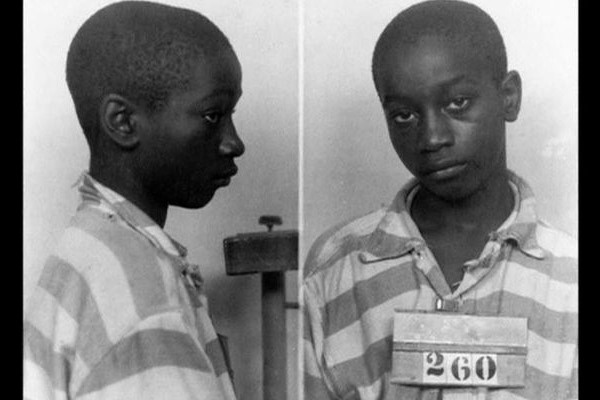
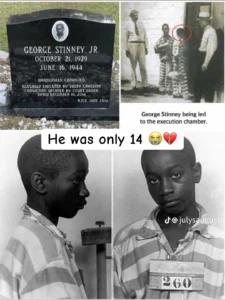
    Police arrested George, who was only 14 years old.

    Police took him from his family and questioned him alone for hours.

    He had no lawyer and no parent with him. Later, police said he confessed to the crime.

    But George never gave a written or recorded confession, and many believe officers pressured or frightened him into saying what they wanted.

    George Stinney’s Trial: Just One Month After Arrest

    George’s trial took place just one month later, on April 24, 1944. The trial was extremely unfair.

    The jury was made up of 12 white men, since Black citizens were not allowed to serve on juries.

    His court-appointed lawyer did very little to defend him.

    No physical evidence connected George to the crime, and prosecutors skipped key witnesses.

    The entire trial lasted only a few hours.

    After discussing for about 10 minutes, the jury found George guilty of murder and sentenced him to death.

    At just 14 years old, George became the youngest person executed in the United States in the 20th century.
    George Stinney Jr, Black Boy's Heartbreaking American InjusticeGeorge Stinney Jr, Black Boy's Heartbreaking American Injustice
    George Stinney Jr, Black Boy’s Heartbreaking American Injustice

    June 1944: Tiny George Stinney Electrocuted on Books

    On June 16, 1944, he was put to death in the electric chair. He was so small that officials had to place books under him to fit the chair.

    George Stinney Jr, Black Boy's Heartbreaking American Injustice
    George Stinney Jr, Black Boy’s Heartbreaking American Injustice

    Witnesses said he was terrified. His family could not be there because they had fled town after receiving threats.

    For many years, people believed that others wrongly accused George.

    There was no solid evidence, no fair trial, and no proper defense.

    His case became a symbol of racial injustice.

    In 2014, seventy years after his execution, a judge reviewed the case again.

    New testimony showed how unfair the trial had been.

    The judge threw out George’s conviction and called it a “great miscarriage of justice.”

    Officials cleared George Stinney Jr. of the crime long after his death.


    Spread the love
    1944 American Betty June Binnicker Black Boy boy crime George Stinney Jr girls Heartbreaking history Injustice Mary Emma Thames Police
    Share. Facebook Twitter Pinterest LinkedIn Tumblr Telegram Email
    wahalaupdate
    • Website

    Related Posts

    Blord Behind Bars: VDM’s Revenge or Crypto King’s Epic Fall?

    April 1, 2026

    Moses Itauma Fuels Title Talk After Franklin Knockout

    March 31, 2026

    Gunmen Attack EKSU Student Hostels, Tension Mounts

    March 31, 2026
    Leave A Reply Cancel Reply

    Hottest Gist

    Burna Boy Songs Banned Amid DJ Tunez Clash Drama

    April 8, 2026

    Fuji Star Osupa Admits Juju Fueled His Success

    April 8, 2026

    NDLEA Nabs Pastor, Wife, Others in Lagos Drug Bust

    April 6, 2026

    Blord Behind Bars: VDM’s Revenge or Crypto King’s Epic Fall?

    April 1, 2026

    Gunmen Attack EKSU Student Hostels, Tension Mounts

    March 31, 2026

    Subscribe to Updates

    Get the latest creative news from FooBar about art, design and business.

    Nsima Ekere Appointed Patron of Arise With Renewed Hope Initiative

    April 12, 2026

    Group faults Gov. Otti over fiscal opacity, OGP delay

    April 12, 2026

    Gov. Eno releases ₦123.5bn road funds

    April 10, 2026

    Breaking: Non-Indigenes Demand ADC Jigawa Congress Inclusion

    Sponsor: Comrade Chidiebere Charles OparaApril 10, 2026
    Facebook X (Twitter) Instagram YouTube TikTok
    • About Us
    • Contact us
    • Advert Placement
    • Privacy Policy
    © 2026 Wahalaupdate. Designed by Wahalaupdate.

    Type above and press Enter to search. Press Esc to cancel.