


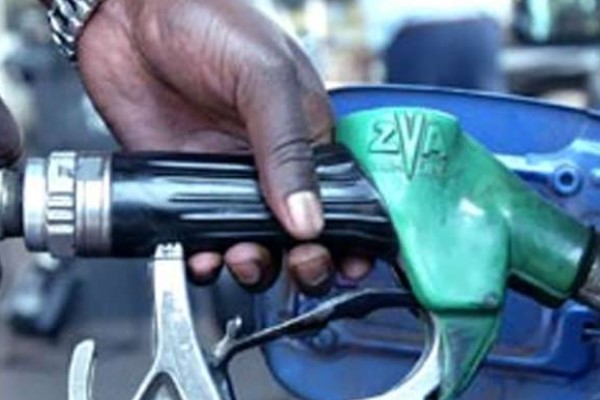
Nigeria’s fuel landscape continues to shift dramatically as the Nigerian National Petroleum Company Limited (NNPCL) announces yet another reduction in the price of premium motor spirit (PMS), Market commonly known as petrol.
Effective immediately, NNPCL retail outlets across key locations in Abuja have lowered their pump price from N835 to N815 per liter, a N20 cut that reflects ongoing adjustments in the downstream oil sector.
This move, confirmed by on-ground observations and station attendants, underscores a competitive pricing battle that’s benefiting consumers while reshaping the energy market.
Reports from Abuja indicate the new pricing rolled out as early as Sunday evening.
Filling stations in high-traffic areas like Wuse Zones 4 and 6, along the Keffi-Abuja Road, and on the Kubwa Expressway have all updated their dispensers to reflect the N815 per liter rate.
An attendant at one such NNPCL outlet, speaking on condition of anonymity, explained that the directive came swiftly, allowing motorists to fill up at the reduced cost starting Monday morning.
This isn’t an isolated event; it’s part of a broader trend where major players are responding to market forces, including cheaper imports and local refining efficiencies.
Context of the Price Cut
To fully grasp this development, it’s essential to rewind to recent events. Just weeks ago, on December 19, 2025, NNPCL had already trimmed its petrol price by N80, bringing it down to N835 per liter.
That adjustment was sparked by a fierce price war ignited when Dangote Refinery slashed its gantry price, the wholesale rate charged to marketers, to N699 per liter.
Dangote’s move pressured competitors, including NNPCL, to pass on savings to end-users.
Now, with NNPCL at N815, the gap narrows but persists: it’s still N79 higher than the N739 per liter available at MRS stations backed by Dangote Refinery outlets nationwide.
This sequential pricing, N699 gantry leading to N739 retail at MRS, then N835 and now N815 at NNPCL—highlights a dynamic where refinery output is challenging the long-standing import reliance.
Historically, Nigeria imported nearly all its petrol, exposing consumers to volatile global crude prices and naira fluctuations.
Dangote Refinery’s operational ramp-up, now producing over 650,000 barrels per day at full capacity, changes that equation by flooding the market with locally refined, cost-competitive fuel.
Drivers, Impacts, and Broader Implications
At its core, this N20 reduction stems from intensified competition rather than a sudden windfall in subsidies or forex stability.
Nigeria fully deregulated its downstream petroleum sector in 2023, ending fixed pricing and allowing market forces to dictate pump rates.
Yet, until Dangote’s intervention, high landing costs from imports, factoring in dollar-denominated crude, shipping, and premiums, kept prices elevated, often above N1,000 per liter earlier in 2025.
Economic Pressures Fueling the Change
Several factors converge here. Global oil prices have stabilized around $70-75 per barrel for Brent crude in late 2025, down from mid-year peaks, easing import bills.
The naira’s relative steadiness post-CBN interventions has also helped. But the game-changer is Dangote.
Its refinery bypasses import duties and forex premiums, delivering petrol at a gantry price 20-30% lower than imported equivalents.
NNPCL, which previously monopolized imports via its subsidiary, now competes directly as a marketer.
This “price war,” as industry watchers call it, mirrors global trends seen in deregulated markets like the U.S., where refinery expansions drive consumer savings.
Impact on Consumers and the Economy
For everyday Nigerians, especially in urban hubs like Abuja and Lagos, this translates to tangible relief.
A N20 drop per liter means a 50-liter tank fills for N1,250 less, modest but cumulative.
Transport costs, which form 40% of food prices per NBS data, could ease inflation, currently hovering at 22-25%.
Ride-hailing drivers, okada operators, and commuters stand to gain most, potentially stabilizing fares and boosting disposable income.
Economically, lower fuel prices stimulate growth.
The World Bank estimates that every 10% fuel price cut lifts GDP by 0.5-1% through cheaper logistics and manufacturing inputs.
Small businesses reliant on generators amid erratic power supply benefit too, as diesel often tracks petrol trends.
However, challenges linger: black-market hoarding could emerge if supply tightens, and rural areas might see slower pass-through due to logistics.
Long-Term Market Shifts
This isn’t just a blip; it’s a pivot toward self-sufficiency. NNPCL’s role evolves from importer to blender and distributor, leveraging Dangote’s crude via swap deals.
By mid-2026, analysts predict pump prices stabilizing at N700-750 nationwide if output scales.
Yet risks abound, militancy in the Niger Delta could disrupt supply, while global recessions might crash crude demand.
Government policy matters too: President Tinubu’s administration has hinted at incentives for modular refineries, potentially multiplying competition.
Sector-Wide Ripple Effects
Downstream players like TotalEnergies, Conoil, and independent marketers may follow suit soon, narrowing the NNPCL-Dangote gap.
Upstream, oil majors like Shell and Exxon eye divestments, freeing assets for locals.
| Key Price Milestone (PMS per Liter) | Date | Change | Trigger |
| N1,078 | Mid-2025 | Peak | Import cost, naira crash |
| N835 | Dec 19, 2025 | -N80 | Dangote gantry to N699 |
| N815 (NNPCL) | Jan 2026 | -N20 | Ongoing competition |
| N739 (MRS/Dangote-backed) | Ongoing | – | Lowest retail benchmark |
This table illustrates the rapid downward trajectory, with potential for further cuts if Dangote expands to 1 million bpd.
Implications for Nigeria’s Energy Future
Optimism tempers caution. While prices dip, true affordability hinges on volumes, NNPCL must ensure equitable distribution to curb artificial scarcity.
Regulators like the PPPRA play a pivotal role in monitoring, preventing collusion.
For investors, this signals maturation: stocks in refineries and logistics could surge, drawing FDI.
Consumers should queue responsibly, avoiding panic buying.
Moderated discussions online emphasize facts over speculation, claims of “subsidy return” are unfounded, as deregulation holds.
Inflammatory rhetoric on shortages or politics detracts from real gains.
In summary, NNPCL’s N815 price cut is a win for wallets and a milestone for local refining.
As competition heats up, Nigerians can expect more relief, fostering economic resilience. Stakeholders must collaborate to sustain momentum.
Market Dynamics and Consumer Relief
This adjustment reflects fierce competition in Nigeria’s deregulated fuel market.
Dangote’s local refining undercuts import costs, forcing NNPCL to compete aggressively.
For motorists, savings add up, a full tank costs N1,250 less, easing transport expenses amid 22% inflation.
Economic Analysis
Expect broader impacts: lower logistics costs could trim food prices by 5-10%, per economic models.
Risks include supply disruptions, but 2026 forecasts predict N700-750 stability.
Key Price Comparison
| Outlet | Price (N/Liter) | Notes |
| NNPC | 815 | Latest cut |
| MRS (Dangote) | 739 | Nationwide low |
| Imports (pre-Dangote) | 900+ | Historical avg |
