


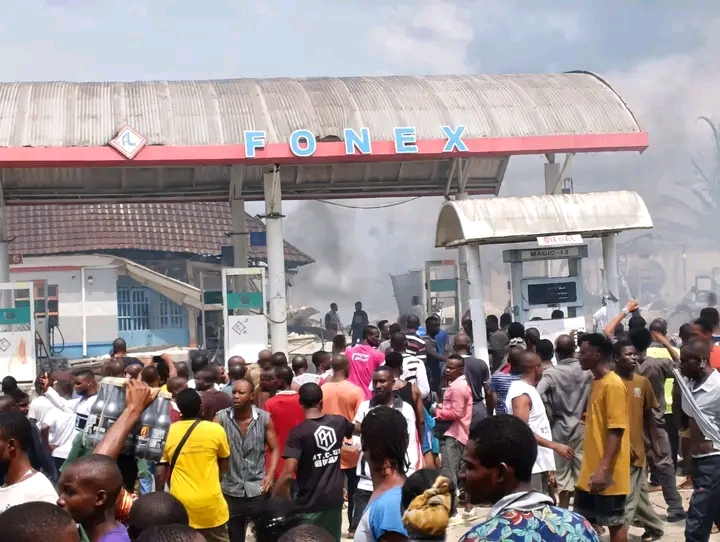
At least two people were killed as two devastating gas-related explosion rocked southern Nigeria on Saturday.
Several others were injured.
It also caused the destruction of properties worth millions of naira.
The incidents, which occurred in Lagos and Calabar on Saturday, have reignited urgent concerns regarding safety compliance.
Fatal Collision in Lagos
In Lagos, a tragic chain of events unfolded in the early hours of the morning along the bustling Lekki-Epe Expressway in the Sangotedo area.
WahalaUpdate gathered that a gas-laden truck, parked stationary, was struck by a tipper vehicle around 2:00 am.
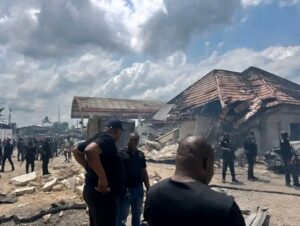
The impact of the collision caused an immediate and massive explosion, engulfing both vehicles in flames.
The victims of the blast were identified as the tipper driver and his assistant.
Officials from the Lagos State Fire and Rescue Service confirmed that the two men were burnt beyond recognition at the scene.
In a tragic twist, the driver of the stationary gas truck reportedly escaped the incident unhurt.
The resulting inferno proved difficult to contain, rapidly spreading from the vehicles to adjacent structures.
The fire consumed three warehouses and approximately 10 roadside shops.
Among the commercial properties destroyed were a gymnasium and a generator house.
Several other vehicles, including passenger buses and a private car, were also caught in the blaze and completely destroyed.
Emergency responders from multiple fire stations across the metropolis were eventually deployed to the location.
After hours of intense effort, they were able to bring the inferno under control.
They prevented the fire from spreading to nearby residential estates and further escalating the disaster.
Calabar Blast Rattles Residents
Hundreds of kilometers away in Calabar, the Cross River State capital, a separate gas explosion sent shockwaves through the community.
The blast occurred at the Fomex filling station located along Edibe Edibe Road in the Calabar South Local Government Area at approximately 9:40 am.
Eyewitnesses reported that the explosion was so powerful it shook nearby buildings, prompting many residents to initially fear a bomb attack.
Debris was scattered across the vicinity as a large fire erupted at the facility.
As of the time of filing this report, no fatalities had been officially recorded in the Calabar incident.
However, the response to the emergency drew sharp criticism from residents.
Locals expressed outrage over what they described as a sluggish and inadequate reaction from both federal and state fire services.
Witnesses noted that nearly an hour after the blast, official emergency responders had yet to arrive at the scene.
In a desperate bid to contain the escalating situation, authorities were forced to contact the fire service unit of the University of Calabar to intervene.
The Commissioner of Police in the state, Rashid Agegbua, later visited the site.
He conducted an on-the-spot assessment as efforts to fully contain the aftermath continued.
A Recurring Crisis
The back-to-back incidents have once again thrust the recurring dangers associated with the handling, storage, and transportation of petroleum products in Nigeria into the national spotlight.
Despite existing safety regulations, incidents involving gas explosions, tanker accidents, and pipeline vandalism remain tragically frequent.
Experts point to persistent lapses in safety enforcement, poor maintenance of infrastructure, and the prevalence of outdated equipment as key contributors to these disasters.
In Lagos, the ease with which the fire spread highlights the dangers of poor urban planning.
Residential and commercial zones often exist in close proximity to high-risk fuel depots and major truck routes.
Furthermore, the delayed response in Calabar underscores a systemic failure in emergency preparedness.
In a megacity like Lagos, while the fire service eventually contained the situation, the initial minutes of such incidents are critical.
The inability to deploy resources swiftly in Calabar during the explosion raised questions about the operational readiness of fire services outside the nation’s commercial capital.
As authorities work to fully assess the extent of the damage and confirm the total number of casualties, victims’ families are left to grapple with the sudden loss of life and livelihood.
