


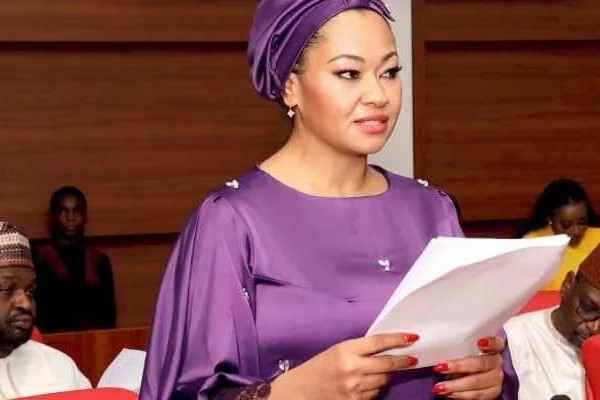
Senator Natasha Akpoti-Uduaghan, representing Kogi Central, clashed fiercely with her colleague Patrick Ndubueze during the Ministry of Steel’s budget defence session.
As a member of the Senate Committee on Steel Development, Natasha sought to question Minister Shuaibu Abubakar Audu on critical issues.
Ndubueze, the committee chairman, blocked her repeatedly, sparking accusations of disrespect and procedural unfairness.
wahalaupdate captured the tense exchange, highlighting frustrations over limited engagement time with the minister.
This incident underscores ongoing tensions in Nigeria’s National Assembly, where gender dynamics and senatorial hierarchy often collide during oversight functions.
Natasha’s bold stand drew widespread attention on social media, amplifying debates about inclusivity in legislative proceedings.
Denial of Speaking Opportunity
Ndubueze denied Natasha the chance to pose what she called vital questions to the minister.
She politely requested permission, stating, “I have something to say. Please, will you mind if I do so?”
Instead of yielding, Ndubueze shut her down abruptly: “Distinguished, please let’s call it a day.” As Natasha pressed to engage the minister directly, Ndubueze struck the gavel again, signaling the end of her input.
This move frustrated Natasha, who viewed it as a personal slight.
Eye witnesses noted the chairman’s firm control over the session, limiting debate despite members’ preparations.
Such actions raise questions about committee transparency, especially when handling budgets critical to Nigeria’s industrial revival.
The steel ministry’s allocations, under scrutiny for efficiency, demanded thorough interrogation, yet time constraints curtailed it.
Natasha’s Accusation of Disrespect
Reacting sharply, Natasha accused Ndubueze of disrespecting her and the committee’s role.
“Mr Chairman, please don’t hit the gavel. I still have something to say, and I think you should respect me enough,” she pleaded.
Ndubueze countered while banging the gavel once more: “I have given you respect. Mr Minister, your time is up.
Thank you.” Undeterred, Natasha fired back: “That is fine. You have disrespected me more than enough.
You can’t do this to me.”
She emphasized the session’s interactive nature, noting, “I have something very vital to ask the minister, and it doesn’t matter if I have spoken once or twice.”
Natasha highlighted inadequate prior meetings, warning, “Only God knows when next we’re going to meet with him as a committee.”
Her words resonated with observers tracking gender equity in the male-dominated Senate.
Context of Budget Defence Tensions
Budget defences often ignite sparks in Nigeria’s legislature, where senators juggle oversight duties with party loyalties.
Natasha, a first-term senator known for her tenacity, entered the fray amid heightened scrutiny of the steel sector’s revival under President Tinubu’s administration.
The Ministry of Steel, tasked with boosting local production, faces criticism over stalled projects like the Ajaokuta Steel Company.
Ndubueze’s chairmanship role amplifies his authority, but Natasha argued it shouldn’t silence colleagues.
Reports indicate the committee had limited sessions, fueling her push for more time.
This clash mirrors broader Senate dynamics, including whispers of regional biases, Natasha from Kogi, Ndubueze from Imo.
Political analysts see it as a microcosm of power struggles post-2023 elections.
Implications for Senate Conduct
Natasha’s outburst spotlights procedural norms in the Red Chamber.
Senate rules allow chairmen discretion, but repeated gavel strikes risk perceptions of authoritarianism.
The incident trended on X (formerly Twitter), with hashtags like #NatashaVsNdubueze gaining traction.
Feminist groups hailed her resilience, contrasting it with muted responses from other female senators.
As budget deliberations continue, this could prompt Speaker Abbas Tajudeen or Senate President Godswill Akpabio to review committee protocols.
For the steel ministry, unresolved questions linger, potentially delaying funding approvals.
Natasha’s defiance may embolden junior members to demand fair play in future defences.
Broader Political Backdrop
Ndubueze, a seasoned lawmaker, chairs the steel committee amid APC’s push for infrastructure.
Their confrontation adds to narratives of intra-party friction under Tinubu’s leadership.
With federal allocations under EFCC watch, echoing recent probes like El-Rufai’s, oversight intensifies.
Natasha’s questions, though unheard, likely targeted fiscal accountability in steel revival efforts.
This episode, unfolding in February 2026, foreshadows tougher scrutiny as mid-term politics heat up ahead of 2027 polls.
Ultimately, it reaffirms the Senate as a battleground for ideas and egos.
