


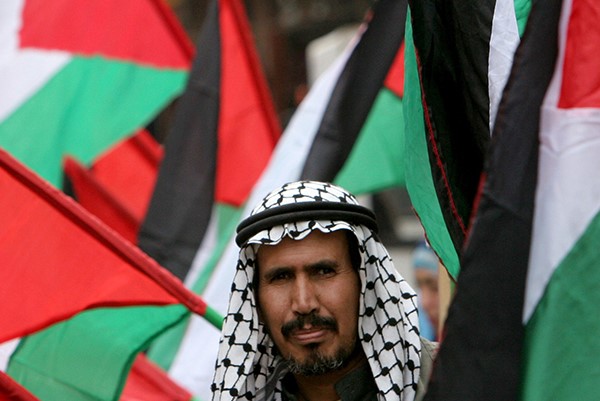
The Arab–Israeli conflict is a complex and enduring struggle rooted in history, religion, and political ambitions in the Middle East.
While it is most often framed as a dispute between Jews (Israelis) and Arabs (Palestinians), the conflict also involves neighboring Arab countries and global powers.
To fully understand its origins and ongoing nature, it is essential to explore its ancient roots.
The waves of conquest and migration, as well as the development of modern nationalism and international politics.
Biblical Roots of the Conflict
Biblical and Religious Background The roots of the conflict extend back to biblical times.
Abraham, a central figure in Judaism, Christianity, and Islam, is seen as the patriarch of both Jews and Arabs.
According to the Bible, Abraham’s son Ishmael, born to Hagar, is regarded as the ancestor of the Arab people, while his son Isaac, born to Sarah, is seen as the forefather of the Jewish people.
In Jewish tradition, God promised the land of Canaan, roughly corresponding to present-day Israel and Palestine, to Isaac’s descendants.
Islamic tradition includes Ishmael in God’s promise, so Jews and Arabs both claim historical, religious rights to the land.
1200 BCE: Rise of Jewish Kingdoms Israel and Judah
By around 1200 BCE, Jewish kingdoms such as Israel and Judah were established in the region.
Over centuries, successive empires, including the Babylonians and Romans, conquered the land.
Rome destroyed Jerusalem in 70 CE, sparking Jewish diaspora; the land changed hands many times thereafter.
7th-Century Arab-Muslim Conquest: Region Turns Predominantly Arab-Muslim
In the 7th century, Arab Muslims conquered the region, making it predominantly Arab and Muslim, with Jewish and Christian communities remaining.
Jerusalem, in particular, became a significant site for Islam due to the Al-Aqsa Mosque, which is revered as one of the faith’s holiest places.
Islamic dynasties and the Ottoman Empire ruled for centuries; local Arabs developed strong cultural ties, viewing the land as their ancestral home.
Late 19th-Century Rise of Zionism: Jewish Push for a Palestinian Homeland
The Rise of Zionism In the late 19th century, Jews in Europe faced increasing persecution and discrimination, prompting many to support Zionism.
A political movement advocating for the establishment of a Jewish homeland in Palestine.
Waves of Jewish migration began, with land purchases and settlements growing steadily.
While Jews acquired some land legally, local Arabs feared displacement and loss of control.
These concerns fueled tensions between Jewish immigrants and Arab residents.
Post-WWI British Rule: Palestine After Ottoman Collapse
After World War I and the Ottoman Empire’s collapse, Britain took control of Palestine.
During this period, Britain made contradictory promises: to the Arabs, it pledged independence.
The 1917 Balfour Declaration supported a national home for the Jewish people in Palestine.
Jewish immigration increased, especially during and after World War II as Jews fled the Holocaust.
Violence between Jews and Arabs escalated, and British authorities struggled to manage the deepening crisis.
1947 UN Partition: Birth of Israel and First Arab-Israeli War
Jewish leaders accepted this plan, but Arab leaders rejected it, viewing the division as unjust.
When Israel declared independence in 1948, neighboring Arab countries invaded.
The resulting war ended with Israel controlling more territory than allocated by the UN plan.
Tragically, about 700,000 Palestinians became refugees, an event known as the Nakba, or “catastrophe,” in Palestinian history.
Post-1948 Wars, Occupation, and Endless Struggle
Wars, Occupation, and Ongoing Struggle The conflict did not end with the 1948 war. In 1967.
The Six-Day War saw Israel capture the West Bank, Gaza Strip, and East Jerusalem, lands Palestinians seek for their own future state.
Israeli settlements in these territories, considered illegal by much of the international community, further inflamed tensions.
Palestinians staged uprisings, known as Intifadas, while Israel enacted strict security measures, citing the need to protect its citizens.
Today’s Core Clash: Israel vs. Palestinians Amid Regional Meddling
Today, the core Arab-Israeli conflict pits Israel against Palestinians, with regional powers still deeply involved in modern political struggles.
Multiple peace initiatives have failed, often due to deep mistrust, violence, and uncompromising positions.
While Israel has normalized relations with some Arab countries, a comprehensive resolution for the Palestinians remains elusive.
Conclusion: From Ancient Roots to Modern Arab-Israeli Struggle
The Arab-Israeli conflict, rooted in religious traditions and historical claims, evolved into a modern struggle shaped by colonialism, nationalism, and war.
Understanding its history helps explain why it remains so emotional and difficult to resolve.
Until leaders address fundamental issues of land, justice, and security, this conflict will persist and impact generations to come.
