


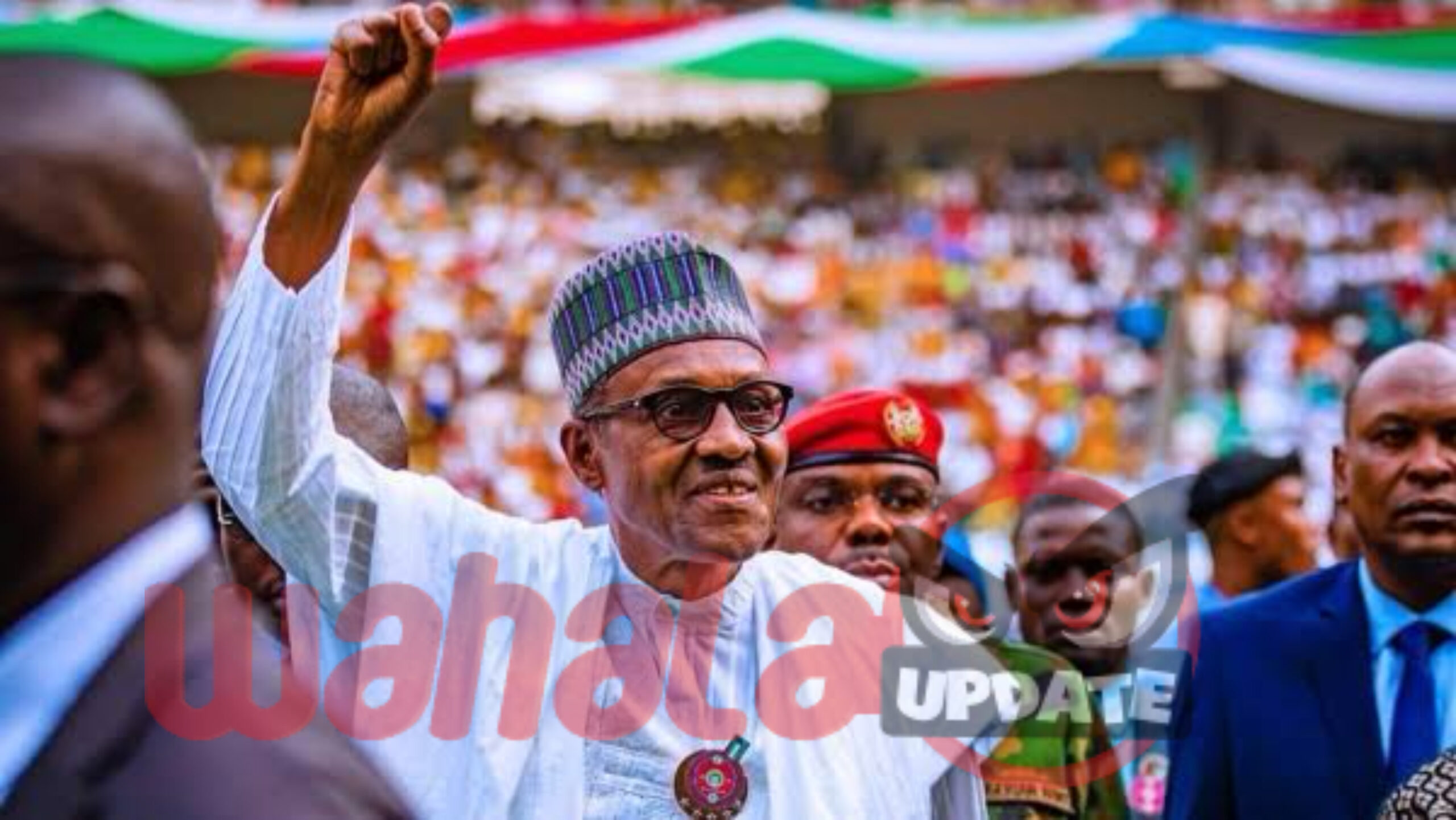
Political tension is escalating in Nigeria’s ruling party, the All Progressives Congress (APC), as loyalists of the late former President Muhammadu Buhari
Especially those tied to the defunct Congress for Progressive Change (CPC), reportedly align with opposition forces, threatening the APC’s grip ahead of the 2027 elections.
Buhari Loyalists Eye Defection Amidst APC Factionalism
Buhari’s death earlier this year has stirred intense speculation about the future of the APC and President Bola Tinubu’s role in 2027.
Since Tinubu assumed office in 2023, the once formidable influence of the CPC loyalists within the APC has noticeably diminished.
Prominent CPC figures such as Nasir El-Rufai and Babachir Lawal have openly opposed Tinubu’s potential second-term ambitions.
Bolaji Abdullahi, the interim National Publicity Secretary of the African Democratic Congress (ADC), claims many Buhari loyalists have already defected to the ADC coalition.
He declared with confidence that “most of the Buhari loyalists are already with us,” adding that the entire northern region backs their cause.
Abdullahi argued this realignment fulfills Buhari’s last wish for his followers to join forces with the ADC, asserting.
“Their presence in the leadership of the coalition indicates that’s where Buhari stood.”
This move exposes a glaring fracture within the APC, where once-unified Buhari supporters feel marginalized and humiliated by Tinubu’s administration.
Abdullahi criticizes Tinubu’s government for scapegoating Buhari for the country’s economic woes, questioning why Buhari loyalists should remain in a party that seemingly demonizes their late leader’s legacy.
The Defunct CPC Bloc: Torn Between Loyalty and Survival
Despite defections, some CPC stalwarts remain firmly entrenched in the APC.
Figures like former Nasarawa State Governor Tanko Al-Makura and Katsina Governor Dikko Radda continue to back the party, though they face mounting pressure internally.
Sources reveal a growing sense of sidelining within the CPC bloc, which previously found unity under Buhari’s leadership but now struggles to maintain influence.
This factional tension raises questions about the APC’s ability to preserve its northern support base.
A critical factor for electoral success in 2027.
The growing discord signals possible realignments, with younger CPC foot soldiers and northern elites allegedly drawn to ADC’s renewed national strategy.
Which claims to offer a fresh platform free from APC’s internal factionalism.
ADC’s Opportunistic Surge: Capturing Buhari’s Legacy
The ADC’s sudden surge appears strategic rather than coincidental.
Officials admit they’re actively courting disgruntled northern elites and disillusioned CPC followers.
This “national consensus strategy” aims to harness the political vacuum created by Buhari’s absence and the APC’s fracturing.
Political insiders suggest that the ADC could become the new home for technocrats.
Northern power brokers dissatisfied with APC’s current direction fueling rumors of a potential mass defection before the next election cycle.
However, no official defections have been declared yet, reflecting the volatile nature of Nigerian politics where allegiances shift with expedience.
The fate of Buhari’s CPC legacy may depend less on ideology and more on who can still effectively mobilize the millions who once rallied behind him.
APC’s Crisis of Leadership and Legacy
The APC must reckon with why Buhari loyalists would abandon the party that once thrived on their support.
Abdullahi bluntly accuses the Tinubu administration of political betrayal.
Claiming the party has marginalized Buhari’s supporters by casting blame on the late president for Nigeria’s economic challenges.
This political ostracism reveals a cynical misuse of Buhari’s legacy by the current ruling class.
For many Hausa-Fulani northern loyalists, continuing to back the APC feels like endorsing a campaign to erase Buhari’s contributions.
Thus, their reported defection is as much an act of political repudiation as it is strategic survival.
Key Players and Their Shifting Loyalties
While Abdullahi cites names like Babachir Lawal, Abubakar Malami, Isah Pantami.
Nasir El-Rufai as evidence of Buhari loyalists now active in the ADC, several established CPC figures maintain their APC membership.
This includes Senator Tanko Al-Makura, Ibrahim Gobir, former Speaker Aminu Bello Masari.
Others who seem determined to preserve influence inside the party apparatus despite growing discontent.
Yet, multiple political analysts contend that the APC risks losing more as the 2027 election nears.
The internal push-and-pull might fracture northern unity, handing an opportunity to opposition coalitions poised to capitalize on the APC’s instability.
What This Means for Nigeria’s 2027 Elections
The 2027 electoral showdown threatens to redefine Nigeria’s political terrain.
Will the APC regain cohesion, or will the ADC and other opposition forces succeed in carving out a potent alternative?
Which commands a cult-like devotion estimated at over 12 million followers.
Losing these supporters could fatally weaken the APC’s northern base, traditionally a critical pillar of its electoral strategy.
Naïve observers might dismiss these internal wranglings as routine politics.
But the falling out between Buhari loyalists and the Tinubu-led APC spells deep institutional fractures that risk destabilizing Nigeria’s fragile political balance just months before the next campaign formally begins.

1 Comment
Pingback: Aisha Buhari: Gossip Sparked Buhari Health Crisis - wahalaupdate