


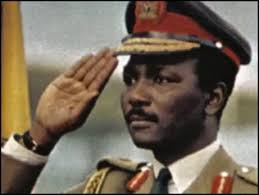
On June 7, 2025, former military Head of State, Gen. Yakubu Gowon, reignited controversy surrounding Nigeria’s brutal Biafra civil war by vehemently denying that the devastating conflict was his choice.
He spoke at the Abuja Anglican Diocese’s 5th Christian Men’s Fellowship Convention on June 7, earning a Lifetime Integrity and Achievement Award.
Gowon insisted that the war, which raged from July 6, 1967, to January 15, 1970, was a tragic necessity rather than a deliberate act of aggression.
Gowon Denies Responsibility for Civil War Outbreak
He stressed that the civil war was never his personal decision.
“It was not my choice,” he declared emphatically,
“but I had to be there, and had to do what I did in order to keep this country together.”
This statement, delivered to a largely sympathetic audience in Abuja.
Nevertheless, it has also drawn sharp criticism from many quarters who accuse him of evading accountability for one of Nigeria’s bloodiest chapters.
The former Head of State explained that his decision to prosecute the war stemmed from urgent needs to preserve Nigeria’s unity, not hatred or ethnic animosity.
“It was never a hatred against any people, I can assure you,” he said.
Seeking to distance himself from accusations of ethnic bias and brutality that marked the conflict.
Gowon Describes Civil War as Life’s Most Difficult Period
Gowon describes the civil war years as his life’s most difficult period, marked by immense personal and national tragedy.
Many Nigerians, especially Igbo, view Yakubu Gowon’s leadership during the war as divisive, causing suffering, starvation, and displacement.
Gowon’s claim that the war was a reluctant necessity faces challenges from historians and survivors blaming political errors, ethnic tensions, and military aggression.
Critics contend that Gowon’s government was responsible for policies and military actions that prolonged the war and worsened humanitarian crises.
In a bid to heal old wounds, Gowon called for forgiveness, reconciliation, and unity across faiths and ethnicities.
“As far as this heart is concerned, everything that I do, it is through prayers,” he said.
He emphasizes that a desire for integrity and compassion guided his post-war decisions.
He urged Nigerians to embrace the principle of “no victor, no vanquished.”
Critics: Government Responsible
Suggesting that the country must move beyond the bitterness of the past to build a united future.
However, skeptics who demand more than words for genuine reconciliation greet this message with doubt.
It demands justice, acknowledgment of past atrocities, and reparations.
Historians and critics scrutinize Gowon’s leadership intensely during the civil war.
With many accusing him of authoritarianism and suppressing dissent.
The war featured widespread famine, mass casualties, alleged war crimes, including blockades that starved millions in Biafra.
Despite Gowon’s necessity claims, the civil war remains a catastrophic failure of leadership and political will in Nigeria’s history.
With long-lasting scars on Nigeria’s national psyche.
Gowon’s recent remarks reignite debates on historical accountability, urging Nigeria toward a more honest reckoning with its Civil War past.
Is Gowon’s Denial an Attempt to Rewrite History?
His insistence the war wasn’t his choice draws criticism as evading responsibility, glossing over the conflict’s complex causes and consequences.
Survivors and descendants of victims have demanded a more candid admission of mistakes and a formal apology.
Arguing that true national healing cannot occur without confronting uncomfortable truths.
Critics call his framing of the war as a reluctant necessity a convenient narrative that absolves leaders of accountability.
“I ask God to help me to do the right thing the way he thinks it should be done, with love and respect for all the people,” he said.
Many Nigerians doubt spiritual reasons can justify the Biafra war’s human cost, 1 to 3 million died, millions displaced.
The legacy of the conflict continues to fuel ethnic tensions and political divisions in Nigeria today.
His statement reopens old wounds, sparking renewed controversy over Nigeria’s Civil War legacy and its enduring impact.
While Yakubu Gowon has defended his actions as necessary and devoid of hatred.
Many Nigerians remain unconvinced, demanding deeper accountability and reconciliation.
Amid Nigeria’s ethnic and regional tensions, Yakubu Gowon’s refusal to fully admit wartime leadership failures hinders lasting peace efforts.
The civil war’s shadow still looms large, and the debate over its causes and consequences remains as contentious as ever.
