


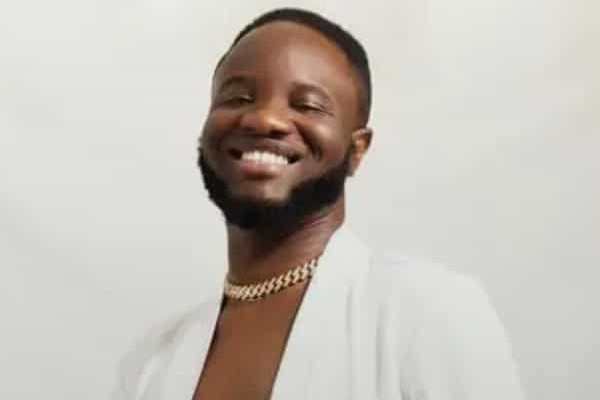
Former Big Brother Naija housemate and comedian, Aderombi Adedayo, known to fans as DeeOne, found himself at the center of controversy this week after receiving an official invitation from the Nigeria Police Force.
According to reports, the development which quickly became a trending topic on social media, has sparked debates about freedom of expression, the boundaries of satire, and the role of law enforcement in Nigeria’s digital age.
The comedian made the police invitation public on Thursday, sharing a scan of the letter on his social media accounts.
The letter, issued by the Force Intelligence Department (FID), directed DeeOne to report to the FID Annex Office in Lagos through the OCCIOS team.
It described the meeting as a “routine interview” forming part of an ongoing inquiry, but did not specify the subject of the investigation.
The Video That Sparked the Storm
While the FID’s letter offered little detail, DeeOne was quick to clarify that the invitation likely stemmed from a video he posted online about President Bola Tinubu’s recent visit to Turkey.
In the video, DeeOne offered candid commentary on what he perceived as unusual aspects of the president’s trip.
Speaking as, in his words, “an ordinary Nigerian,” the comedian raised questions and shared opinions in a manner that was both satirical and critical, a hallmark of his online persona.
DeeOne’s post, as with much of his content, quickly went viral.
It circulated widely across X (formerly Twitter), Instagram, and WhatsApp, sparking debate among social media users.
Some hailed his boldness and wit, while others cautioned that his remarks about the president and his family might cross the line into disrespect or even criminality.
Legal and Social Media Reactions
Following the release of the video and the police letter, DeeOne reported a flood of phone calls and online messages.
“People are saying all sorts of things,” he told fans.
“Some say I was cyberbullying. Some say I should never have mentioned the president or his son.
Others say I was just exercising my rights.”
The comedian acknowledged the range of opinions but stood his ground, asserting that he had done nothing wrong.
“I spoke as a citizen,” he said. “If I see something I think is odd, I should be able to talk about it. That’s what democracy is about.”
DeeOne also made it clear that, should the police invitation be related to his online commentary, he has no intention of apologizing for expressing his views.
Freedom of Expression and Its Limits
DeeOne’s situation has reignited long-running debates about the boundaries of free speech in Nigeria.
Nigeria’s Constitution protects free speech, but Cybercrimes Act, sedition, defamation laws often silence critics of officials.
Legal analyst Funmi Ajayi explains: “Freedom of expression is not absolute, but it is a fundamental right.
The challenge is that public figures in Nigeria often conflate criticism, satire, or even comedy with defamation or incitement.
The line can be blurry, but in most democracies, criticizing leaders, even harshly, is considered fair game.”
Social media platforms have further complicated the landscape. With millions of Nigerians using X, Facebook,
TikTok, and Instagram as sources of news and entertainment, viral posts like DeeOne’s can reach vast audiences in minutes.
This reach, while empowering, also brings heightened scrutiny.
The Police’s Perspective
Police silent on DeeOne invite; “routine” letter wording sparks debate, is it intimidation or mere clarification?
Human rights groups warn that even the appearance of police involvement in online matters can have a chilling effect on public discourse.
“Inviting a comedian for questioning over a video, especially one that is clearly satire, raises concerns about freedom of speech,” says Ifeanyi Ude, a spokesperson for a Lagos-based civil liberties organization.
“Even if the aim is just to talk, the power imbalance is obvious. Most ordinary citizens would be intimidated.”
DeeOne’s Response and Public Statement
Despite the uncertainty surrounding the police invitation, DeeOne has maintained a calm and defiant tone.
In a lengthy social media post, he reassured his followers that he would comply with the police request and report to the FID Annex Office as directed.
He also promised to update the public about whatever transpires during or after his visit.
“I’m a law-abiding citizen,” he wrote. “If the police want to ask me questions, I’ll answer.
But I stand by what I said. I meant no harm. I only shared my opinion as a Nigerian who cares about the country.”
He continued: “I don’t believe sharing my view on national issues should be a crime. I respect the police, but I also respect my right to speak my mind.”
Satire, Comedy, and Social Commentary in Nigeria
DeeOne’s ordeal is the latest in a series of incidents involving comedians, musicians, and online personalities who have faced backlash for lampooning politicians or questioning government decisions.
In a society where humor is often used to cope with hardship and critique authority, the line between entertainment and dissent can become blurred.
Veteran comedian Ali Baba weighed in on the situation, noting: “Comedy has always been a mirror to society.
You can’t tell jokes about the weather every day. Sometimes, the truth is uncomfortable, but that’s the job. If we start inviting every comedian to the police station, we’ll run out of comedians.”
Reactions from the Entertainment Industry and Public
The entertainment community has largely rallied around DeeOne, with several prominent figures posting messages of support and urging for restraint on the part of authorities.
Fans have launched hashtags and campaigns calling for respect for artistic freedom and due process.
Others insist that holding leaders accountable, through humor or criticism, is essential for democracy.
A Broader Conversation About Rights and Responsibilities
DeeOne’s case highlights the tension between freedom and responsibility in the digital age.
As Nigeria continues to grapple with questions of governance, accountability, and the role of citizens, DeeOne’s experience serves as a reminder that the right to free expression must be vigilantly protected, and responsibly exercised.
Looking Ahead: Awaiting the Outcome
DeeOne is scheduled to meet with police on Monday.
As Nigerians await the outcome, the case is likely to set a precedent for how law enforcement handles similar incidents in the future.
For now, the comedian says he will continue to speak his mind, and encourage others to do the same.
“Our voices matter,” he wrote.
“And I hope we never lose the courage to use them.”
