

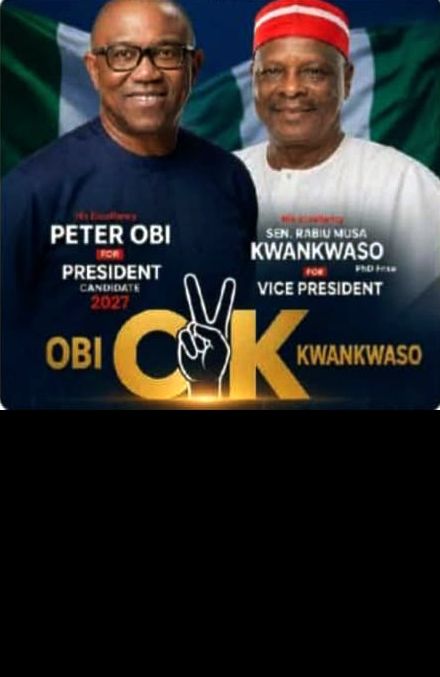
Abuja Summit Sparks Fresh Momentum for Obi Kwankwaso Political Alliance
A major political realignment may be underway in Nigeria as loyalists of Peter Obi and Rabiu Musa Kwankwaso convened in Abuja for a high-level unity summit,at Barcelona hotels , signalling what observers describe as a calculated move toward a formidable 2027 electoral coalition.
The summit, convened under the OK Movement, carried the theme “One Voice, One Vision: In Unity We Win” a message that goes beyond optics and reflects a growing urgency among opposition blocs to consolidate strength ahead of the next general election cycle.
Key Political Figures and Influencers in Attendance
The gathering drew influential political voices and mobilisers, including Buba Galadima, Aisha Yesufu, and Isaac Fayose, alongside grassroots coordinators and regional stakeholders.
Their presence underscores a deliberate attempt to bridge activism, youth engagement, and traditional political structures, an approach widely seen as critical in reshaping Nigeria’s evolving democratic space.
Behind the Scenes: Strategic Moves and Action Points
Far from a routine political meeting, insiders reveal that the summit focused on concrete steps designed to transform informal cooperation into a structured alliance.
Top on the agenda was the integration of support bases, particularly aligning the Obidient Movement with the Kwankwasiyya network to create a unified national front.
Participants also agreed on the formation of a joint mobilisation committee, tasked with coordinating grassroots outreach, voter education, and state-level political engagements across Nigeria.
Another major highlight was the ongoing evaluation of party platforms, with strong indications that both camps are reconsidering their positions within the African Democratic Congress. Emerging discussions suggest that the National Democratic Congress could serve as a potential platform for a joint presidential ticket.
Defection Speculations and Political Calculations
Although no official announcements have been made, the political undercurrent is unmistakable. Talks of a coordinated defection continue to gain traction, raising the stakes within Nigeria’s opposition ecosystem.
If successfully executed, such a move could alter the balance of power, positioning the Obi Kwankwaso bloc as a credible third force capable of challenging dominant political parties.
Message Discipline and Policy Alignment Take Centre Stage
Participants at the summit emphasised the need for clear, consistent communication, acknowledging that public perception will play a decisive role in the success of any alliance.
Equally important was the call for policy harmonisation, with discussions centred on economic recovery, national security reforms, and institutional accountability key issues expected to define the 2027 election narrative.
What This Means for Nigeria’s Political Future
The Abuja summit marks an early but strategic phase in what could become a broader coalition movement. Analysts suggest that the approach being adopted build structure first, declare later reflects a more disciplined political playbook.
For now, the alliance remains unofficial, but the direction is increasingly clear: consolidate internally, align nationally, and present a unified alternative to Nigerian voters.
Bottom Line
The meeting in Abuja may well be remembered as the starting point of a significant political shift. Whether this evolving partnership between Peter Obi and Rabiu Musa Kwankwaso matures into a full-scale alliance will depend on execution, trust, and timing.
But one reality is already unfolding: Nigeria’s 2027 political landscape is quietly being redrawn, and this alliance could sit right at the center of it.
